Online Pokies in New Zealand: 2026 Changes
 Available in US
Learn how oversight, game features and practical cautions shape the experience of playing online pokies from New Zealand.

Table of Contents
- Online Pokies in New Zealand: What the 2026 Changes Mean
- How to Assess an Online Pokies Site’s Oversight
- Game Styles, Volatility and What a Session Can Feel Like
- Playing for Real Money: Tax and Practical Caution
- What Kiwi Players Should Know Before They Play
- Free Spins and the Difference Between Features and Offers
- Bonus Features and the Cost of Buying a Round
- Progressive Jackpots and Where Their Contributions Come From
- RTP as a Long-Run Measure, Not a Payout Promise
- Is There a Best Time to Play Online Pokies?
Online Pokies in New Zealand: What the 2026 Changes Mean
The key distinction is between where an online casino operates and where a player is sitting. Under New Zealand’s Gambling Act 2003, an online casino cannot be operated from within the country. That restriction concerns the operator: it does not make it illegal for a New Zealander to play at a casino based offshore.
This distinction matters when you are looking at online pokies. A site may be available to people in New Zealand without being a locally operated casino. Before the new regime, online casino gambling supplied from overseas was not licensed or supervised by a New Zealand regulator. A player using an offshore site therefore had no domestic government agency to turn to for recourse over a dispute. The fact that a site accepts New Zealand customers should not be mistaken for proof that it is licensed under New Zealand law.
The position began to change in 2026. The Online Casino Gambling Act 2026 created New Zealand’s first domestic licensing framework for online casino gambling and came into force on 1 May 2026. Earlier specialist market commentary had described the licensing rollout as expected from 2026; the current legal timeline is more specific. The Act is now in force, but the full licensing system is not expected to be operational until 2027.
Choosing online pokies in New Zealand means weighing the details that matter to you before you play. This list gives you a concise reference point for considering the options.
Payout speed: 1-3 business days Wintino lists a payout speed of 1–3 business days, giving you a stated timeframe to consider when reviewing its payment details.
License: Curaçao Gaming Authority, licence no. OGL/2024/165/0185 BitStarz lists a Curaçao Gaming Authority licence, number OGL/2024/165/0185, for you to check as part of your research.
License: Tobique Gaming Commission, licence no. 0000002 Ricky Casino lists a Tobique Gaming Commission licence, number 0000002, which gives you a specific licensing detail to review.
License: Tobique Gaming Commission, licence no. 0000064 Neospin lists a Tobique Gaming Commission licence, number 0000064, for you to consider when checking its credentials.
License: 07017519840 · Payout speed: 1-3 business days Zotabet lists the identifier 07017519840 and a payout speed of 1–3 business days. You can use these details when reviewing the operator.
License: Malta Gaming Authority, licence no. MGA/B2C/394/2017 N1 Casino lists a Malta Gaming Authority licence, number MGA/B2C/394/2017, giving you a specific credential to look into.
Payout speed: 1-3 business days Lamabet lists a payout speed of 1–3 business days, a useful detail for you to consider when reviewing its payment information.
License: Tobique Gaming Commission, licence no. 0000091 7Bit Casino lists a Tobique Gaming Commission licence, number 0000091, for you to check as part of your research.
License: Malta Gaming Authority, licence no. MGA/B2C/370/2017 Play Grand lists a Malta Gaming Authority licence, number MGA/B2C/370/2017, which you can review when assessing the operator.
There is a transition period in the meantime. Online casinos that were already serving New Zealand customers before 1 May 2026 may continue doing so under the Act’s transitional provisions until 1 December 2026. This is not the same as saying that every offshore site is covered, or that every casino available to New Zealand players already holds a local licence. The transitional permission applies to providers that meet the stated condition of having been in the market before the Act began.
For readers comparing online pokies in New Zealand in 2026, that timing can make the market harder to interpret. A familiar site may still be operating during the transition, while the system for issuing domestic licences is not yet fully running. The legal change establishes a path towards local licensing; it does not turn all online casinos into New Zealand-licensed operators at once. Nor does the fact that an operator is based overseas, by itself, make an individual player’s activity a criminal offence.
It helps to keep three ideas separate: domestic operation, offshore access and local licensing. Domestic operation means that the casino is run from within New Zealand, which the Gambling Act 2003 does not permit. Offshore access means a person in New Zealand can use a casino provided from outside the country. Local licensing is the new regulatory framework created by the 2026 Act, whose full operation is still ahead. These terms describe different parts of the picture and should not be treated as interchangeable.

The transition also means that the phrase “available in New Zealand” can tell you less than it first appears to. It may indicate that a site can be reached and accepts players from the country, but it does not by itself establish that the operator is locally licensed. For someone browsing for the best online pokies in New Zealand, separating access from regulatory status is more useful than relying on a site’s local-facing language alone.
The rules are therefore moving from a market in which offshore casino gambling had no New Zealand licensing or supervision to one intended to bring online casino operators into a domestic licensing system. That shift is significant, but it has a timetable: the Act took effect in May 2026, transitional operation for qualifying existing providers runs to December 2026, and the full regime is expected in 2027. Those stages should not be compressed into the claim that a complete local licensing system is already operating.
This context is worth bearing in mind before comparing games or deciding whether to deposit. A player may lawfully access an offshore casino, yet still be using a service outside New Zealand’s domestic licensing arrangements during the transition. The new law changes the regulatory direction of travel; it does not erase the difference between playing from New Zealand and operating a casino within New Zealand.
Attention: The fact that a site accepts New Zealand customers does not prove it is licensed under New Zealand law or supervised by a domestic agency.
How to Assess an Online Pokies Site’s Oversight
A site can be accessible to players in New Zealand without being supervised by a New Zealand regulator. That distinction matters if a dispute arises: an offshore operator’s licence, where it has one, does not place the business under local oversight or give you a domestic agency to turn to for help.
The Department of Internal Affairs (DIA) is identified as the regulator under New Zealand’s online casino licensing framework. A specialist review of that framework describes an initial allocation of up to 15 licences. The number is a feature of the licensing design, not a measure of how well any individual operator protects its customers. Nor does a site’s claim to hold a foreign licence establish that it has a New Zealand licence.
The framework sets expectations for operators that are licensed locally. A specialist account of the requirements identifies harm minimisation, restrictions on advertising, age verification and tax contributions among them. These requirements address different responsibilities: reducing gambling harm, controlling how gambling is promoted, checking that customers meet age rules, and meeting financial obligations. They provide a basis for local supervision of licensed operators; they do not automatically apply to an offshore site simply because it accepts New Zealand customers.
What local oversight changes
Local licensing creates a defined relationship between an operator and the regulator. If a licensed business fails to meet its obligations, the regulator has a role in overseeing that business under the local framework. This is different from a player trying to resolve a complaint with a company based overseas, under rules administered elsewhere.

New Zealand does not have a specific gambling regulator for online casinos operating offshore. Those sites fall outside DIA oversight, so a New Zealand player cannot rely on a local consumer protection agency to handle a dispute with them. That can leave you dealing directly with the operator or relying on processes associated with its overseas jurisdiction. The practical point is not that every complaint will fail, but that local regulatory support is not available in the same way.
This is why “licensed” needs context. A licence may indicate that an operator is accountable to a regulator somewhere, but it does not by itself tell you whether the DIA supervises the site. A foreign licence and a New Zealand licence are not interchangeable forms of oversight. If a site describes itself as regulated, the useful question is which authority is responsible for it and whether that authority is the New Zealand regulator under the local framework.
Reading claims about protection
Be careful with broad phrases such as “fully regulated” or “safe for New Zealand players”. They do not identify who supervises the operator or what route is available if you have a complaint. A polished site, familiar payment options or a large game selection cannot establish local regulatory oversight either.
Before relying on a site’s claims, separate three issues: whether it says it holds a licence, which regulator that licence relates to, and whether the site is covered by New Zealand’s licensing framework. The first two may concern an overseas regulator; only the third speaks to local supervision. If the information is unclear, do not treat the uncertainty as proof that New Zealand protections apply.
Under the New Zealand online casino licensing framework, the Department of Internal Affairs (DIA) is identified as the regulator.
Licensing is also not a promise that every interaction will go smoothly. It establishes obligations and oversight, rather than guaranteeing a particular outcome in a dispute. For an offshore platform, the central limitation is more basic: there is no New Zealand gambling regulator supervising that operator and no local consumer protection agency tasked with resolving a player’s complaint against it. That is the practical difference to weigh when comparing online pokies sites, including any site presented as a candidate for the best online pokies site in New Zealand.
Regulatory status can change as the licensing framework develops. Claims should therefore be read in context, not treated as timeless assurances. The key distinction remains straightforward: local oversight comes from coverage under New Zealand’s framework; an offshore operator’s presence on a screen in New Zealand does not, on its own, create that coverage.
Game Styles, Volatility and What a Session Can Feel Like
The difference between classic and video pokies is more than how they look on screen. Their structure shapes what happens during play: classic games keep things simple, while video titles can add symbols and features that make each spin feel less predictable. Neither style guarantees a particular result, so it helps to know what kind of game you are choosing before you start.
Classic games: a simpler format
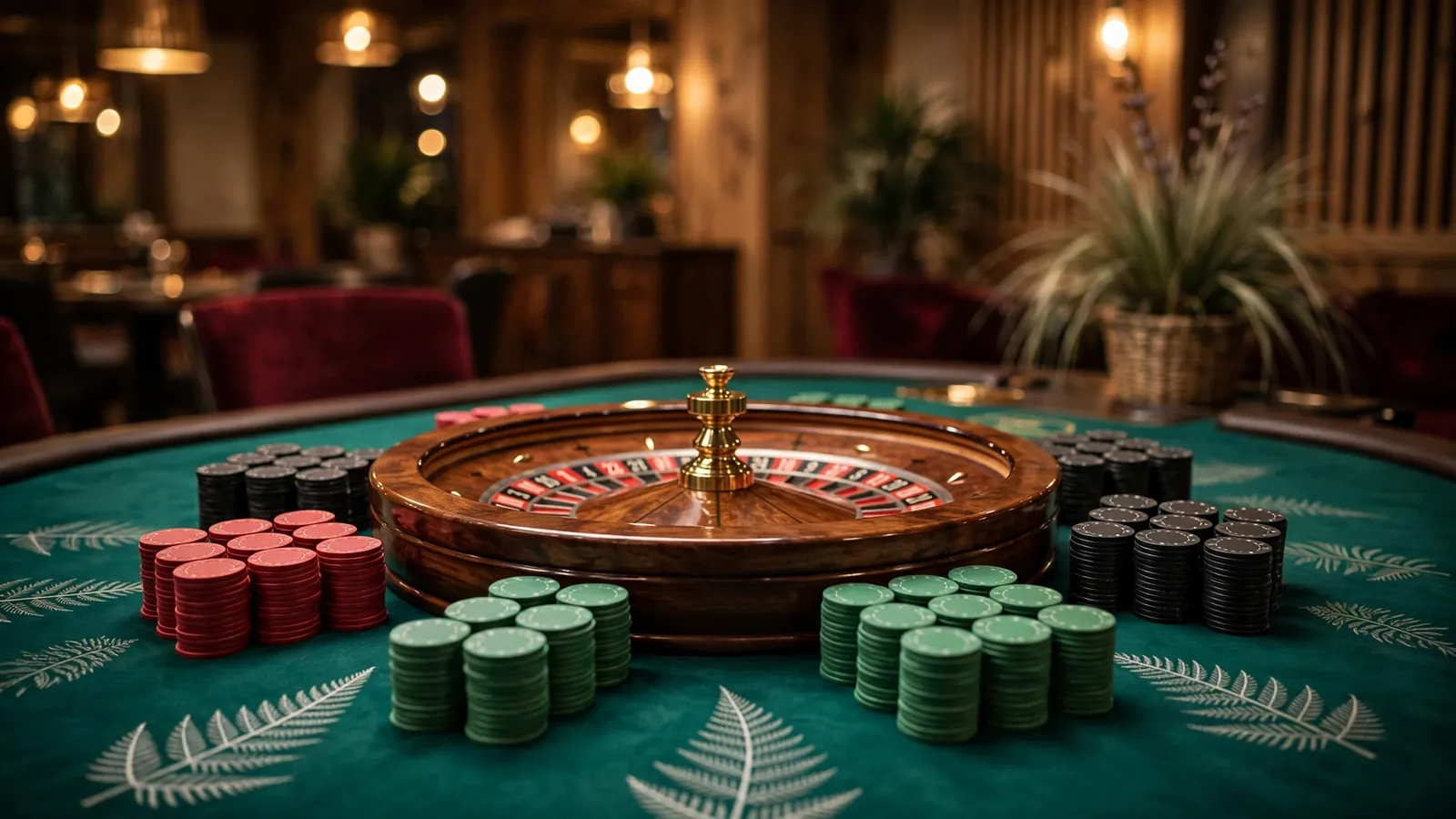
Classic pokies use three reels and do not include bonus rounds. Their straightforward format can make them easier to follow: you watch the reels stop and see whether the symbols form a winning combination. If you prefer a game without extra rounds or layered features, this style may suit you.
A simpler structure does not mean a more reliable return. Wins still depend on chance, and a classic game can have a quiet stretch just as a more elaborate title can. Choosing a familiar format may make the rules easier to understand, but it cannot make outcomes predictable.
Video pokies: more features on screen
Video pokies commonly use five reels and may include wilds, scatters and free-spins rounds. These features change how the game is presented and can create more variety from one spin to the next. They do not mean that a win is due, or that a feature will appear during a particular session.
If you are comparing online pokies, look at the game’s basic structure before deciding whether it suits you. A busy screen and several features can make a title feel more involved, but you should still be comfortable with the rules and the pace of play. A feature-rich game is not automatically a better fit than a classic one.
Volatility and the rhythm of a session
Volatility describes the pattern of wins, not a promise about what you will receive. Low-volatility pokies tend to pay smaller wins more often. High-volatility games pay less frequently, but a win can be larger. That difference can shape how a session feels even when both games are operating as designed.
With a low-volatility game, smaller wins may appear more regularly, although they do not ensure that your balance will hold steady. With a high-volatility game, longer gaps between wins may be part of the experience. A larger possible win does not make it more likely to arrive during your session.
These pokies tend to pay smaller wins more often, which may make the pace of the session feel more comfortable.
These games pay less frequently, but a win can be larger, often resulting in longer gaps between wins.
Think about how you respond to those patterns. If frequent small wins help you enjoy the pace, a lower-volatility title may feel more comfortable. If you choose a higher-volatility game, be prepared for the possibility of a quieter run. Neither preference changes the random nature of play, and neither style is a reliable way to make money.
Before playing, decide how much you are comfortable spending and when you will stop. If the session starts to feel tense, take a break rather than increasing your stake to chase a win. The best online pokies for you are not necessarily the newest or the most feature-heavy; they are the ones whose rules and style you understand, and whose pace you can accept without feeling pushed to keep playing.
Playing for Real Money: Tax and Practical Caution
Moving from free play to real-money pokies changes what is at stake: a spin can now use money you may need for other things. It does not, by itself, change the general New Zealand tax treatment of recreational gambling winnings. Those winnings are generally not taxed. That is a broad description of recreational play, not a promise about every person’s financial circumstances.
Keep the distinction clear between a possible win and dependable income. A balance shown on screen can rise or fall as you play, and it should not be treated as money you can count on for bills or planned spending. Do not increase your stakes to try to recover losses; doing so puts more money at risk without changing the uncertain outcome of a spin.
Before you start, decide how much you can afford to lose and set that as your session limit. Treat the amount as spent once you commit it to play, rather than assuming it will come back. If you reach your limit, stop for that session. A budget is useful only if you decide it in advance and do not revise it in response to wins or losses.
Free play can let you explore a game without staking cash, but it does not show what a real-money session will feel like financially. Once you make a deposit and play for money, keep your records clear: note what you put in and what you withdraw, and check your account balance before making another deposit. This can help you see your actual spending rather than relying on how a session felt.
Pay attention to the currency shown at each stage of a transaction. If your account or payment method uses a different currency from the casino balance, conversion may affect the amount charged or received. Check for conversion fees before depositing, and review the available withdrawal methods and any limits before you commit funds. These are practical checks, not evidence that a particular site will process a payment in a certain way.
If you have questions about how gambling income applies to your own situation, get advice from a qualified New Zealand tax professional. For ordinary recreational play, the general position is that winnings are not taxed; personal circumstances can still matter. Keep gambling money separate from essential spending, and do not borrow to play. The aim is to make the financial boundary clear before real money enters the session, not after a loss or a win has changed how you feel about continuing.
What Kiwi Players Should Know Before They Play
For an adult in New Zealand, using an offshore online pokies platform is not itself a criminal offence. That distinction matters: the rules for people who play are not the same as the rules governing businesses that provide online casino gambling. You do not commit a crime simply by placing a bet with a casino based overseas.
That is a narrow point about criminal liability, not a general endorsement of any platform. It does not mean every site is dependable, that every game will suit you, or that you have the same protections you might expect from a local service. Before you decide to play, keep the legal point separate from the practical choice of where to spend your money.
Age is the other basic threshold. You must be at least 18 to play online casino games in New Zealand. If you are under that age, do not create an account or place bets, even if a website appears willing to accept you. A site’s sign-up process does not change the age requirement.
If you are an adult considering the best online pokies for Kiwi players, begin with your own circumstances rather than a claim that one game or platform is right for everyone. Consider whether you are comfortable risking money at all, and whether you can stop if playing begins to affect your finances or your day-to-day life. A game being easy to access does not make it harmless, and an adult’s legal ability to play does not make a wager a good decision for them.
It also helps to be clear about what “legal for a player” does and does not answer. It addresses whether an individual New Zealander commits a criminal offence by playing offshore. It does not settle questions about the operator, the terms attached to an account, or what may happen if a dispute arises. Those are separate considerations, so do not treat the absence of a criminal offence as proof that a particular site is safe or locally accountable.
People looking for the best online pokies for New Zealanders may have different preferences, but the same personal checks apply whether you favour familiar reels or more elaborate video games. Set a limit you can afford to lose before you start, and do not chase money after a losing run. If you find yourself hiding play, borrowing to continue, or struggling to stop, step away and seek support rather than treating another session as a solution.
The key personal-access points are straightforward: online casino play is for adults aged 18 and over, and playing at an offshore platform is not a criminal offence for an individual New Zealander. Keep those points in perspective. They explain your position as a player; they do not remove the need to make a careful choice about whether to play at all.
Free Spins and the Difference Between Features and Offers
Free spins can be part of a video pokie’s design, but the phrase can also describe a promotion. Those are different things. A feature belongs to the game itself; an offer is made by a casino and may apply only under stated conditions. Seeing free spins mentioned in a game description does not, by itself, mean that a casino is giving you promotional spins.
Video pokies commonly use five reels and may include wilds, scatters and free-spins rounds. These elements shape how a game plays, but their presence does not tell you how often a round will appear or what it will pay. The game’s own information is the place to check what its features do. A free-spins round is a game event, not a promise of a particular result.
Promotional free spins are separate. They may be presented as part of an offer, with conditions that are set by the operator. Read those terms before accepting an offer; do not assume that a game feature and a promotional benefit are interchangeable. The word “free” can refer to different things, and it does not explain the conditions attached to a promotion.
The distinction also matters when you are browsing games without staking money. A free-to-play option, where available, is not the same as a free-spins round within a game, and neither should be taken as proof that a casino has a current promotion. If you are looking for pokies to try without downloading software, check what the specific game page says about access and whether play is available in a browser. Do not infer availability from the title or from a mention of free spins.
Before playing, separate three questions: does the game contain a free-spins feature, does the casino have a promotional offer, and can you access the game without downloading it? Each answer depends on a different detail. Keeping them separate makes it easier to understand what you are opening and avoids treating an in-game feature as an offer of free play or money.
Bonus Features and the Cost of Buying a Round
A bonus-buy feature lets you skip the usual route to a bonus round by paying a set multiple of your normal stake. Instead of waiting for the game to trigger the feature, you choose to enter it directly. The cost is charged for that spin, so it can be far larger than the amount you would ordinarily wager.
The multiplier varies by game. A specialist review puts the cost range at 50 to 100 times the stake, with the exact figure depending on the title. Treat that as a guide to the scale of the purchase, not a price that applies to every game. The game’s own information panel should show the cost before you confirm. If it does not, avoid making the purchase until you can see what will be deducted.
Consider what the multiplier means for your balance before tapping the buy button. A purchase priced at a large multiple commits a substantial amount in one go; entering the feature does not guarantee that its outcome will return that amount. The bonus round is part of the game, not a promise of a particular win. If the charge would exceed the amount you intended to risk, declining the feature is the clearer choice.
Buying a bonus round can cost 50 to 100 times your stake, committing a substantial amount in one go without guaranteeing a return.
Bonus buys can also be treated differently from ordinary spins when promotional funds are involved. A specialist review reports that they are generally excluded from wagering requirements attached to promotional funds. That means a qualifying purchase may not count towards those requirements, even if the game allows you to use the feature. The terms for an individual promotion and game matter, so check them before staking promotional money rather than assuming every spin or feature counts.
Keep the two costs separate in your thinking: the price of entering the bonus round and any conditions attached to promotional funds. A feature may be available in the game while still being ineligible for promotional wagering. If the rules are unclear, do not rely on the purchase to meet a requirement.
Bonus buys are optional. You can play a game without using one, and choosing not to buy the round avoids the larger upfront charge. If you do use the feature, check the multiplier first and make sure the total cost fits the amount you are prepared to lose. A quick confirmation of the price can prevent a single click from committing much more than an ordinary spin.
Progressive Jackpots and Where Their Contributions Come From
A progressive jackpot is built from contributions linked to spins on the game, rather than being a fixed prize that stays the same. When the same game runs across multiple casinos, those contributions can feed a shared jackpot pool. The prize can therefore reflect activity across the participating casinos, not just spins made by one player at one site.
That pooled structure distinguishes progressive jackpot pokies from games with a fixed top prize. A spin contributes to the jackpot pool while also playing the base game. The jackpot is a separate prize mechanism layered over that game, and its growing total does not mean the base game has become more generous.
There is a trade-off in how each bet is allocated. Part of the stake goes towards the progressive prize, leaving less of it assigned to the base game. As a result, the base-game RTP on progressive jackpot pokies is lower than it would be if that portion were not directed to the jackpot. The displayed jackpot amount and the base game’s return are therefore different things: a large prize pool does not raise the base-game RTP.
This matters when you compare real online pokies. A progressive title may attract attention because the jackpot is visible and can grow as contributions accumulate, but that figure alone cannot tell you how the underlying game is structured. The pooled prize is funded by spins across casinos running that game; the base-game component reflects the portion of bets assigned to ordinary play.
If you are comparing pokies for real-money play, separate the appeal of the jackpot from the game’s base-game return. A progressive prize can be substantial without changing the fact that part of each bet is diverted from the base game. That distinction also applies when considering online pokies for their rewards: the jackpot is not a general boost to every spin, and it does not make the regular game’s return higher.
Progressive jackpots are best understood as shared pools attached to particular games. Contributions from spins across participating casinos help build the prize, while the allocation to that pool reduces the base-game RTP. Keeping those two parts separate gives you a clearer picture of what the jackpot represents—and what it does not.
RTP as a Long-Run Measure, Not a Payout Promise
Return to player, or RTP, is a theoretical percentage describing how much of the total money wagered on a game it is designed to return as winnings over a very large number of spins. It is a statistical measure, not a prediction of what you will receive in a particular session.
An RTP of 97% illustrates the distinction. Across an extremely large volume of play, the game is designed to return NZ$97 for every NZ$100 wagered. That does not mean a player who stakes NZ$100 will get NZ$97 back, nor that winnings will arrive in a steady pattern. A short session can end with a result well above or below the figure.
The percentage is calculated through millions of simulated spins. That scale matters: the theoretical return describes the game’s expected behaviour over extensive play, not a small sample of spins. It cannot tell you whether your next spin will win, or how a particular session will finish.
RTP can still help when comparing online pokies, provided you treat it as one piece of information rather than a payout promise. A higher published percentage indicates a higher theoretical return over the long run, but it does not guarantee better results for you today. The figure also does not tell you how wins are distributed during play; that is a separate feature of a game.
Check the game’s information panel for its RTP rather than assuming that a version listed elsewhere has the same setting. Some studios release a title with multiple RTP configurations, and the operator selects which version to make available. As a result, a figure attached to a game in one place may not describe the version you can actually play.
The same care applies when you see claims about the best payout online pokies. A prominent percentage is useful only if it refers to the specific game version on offer, and it still describes long-run theoretical performance. It cannot make any individual result predictable. Treat RTP as a comparison tool for understanding a game’s design, not as a forecast of what your money will do.
Is There a Best Time to Play Online Pokies?
There is no time of day that makes an online pokie more likely to pay. The games use random number generators, and each spin is independent. A result from an earlier spin does not affect the next one, whether you play in the morning, late at night or after a long break.
That also means a run of losses is not evidence that a win is due. Nor does a recent win make another one more likely. Waiting for a particular hour, returning after a losing streak or changing your routine cannot influence the outcome of an individual spin.
It helps to separate timing from RTP. RTP describes a game’s theoretical return across a very large number of spins; it does not predict what will happen in a particular session or at a particular hour. A game’s long-run measure does not create a favourable window for you to play.
So, if you choose to play the best online pokies for your preferences, choose a time based on your own circumstances—not on a belief that the game behaves differently then. Play when you can give the activity your attention and are not trying to make up for a loss or fit in play around an urgent responsibility. If you feel pressured, tired or distracted, postponing a session is a practical choice, even though it does not change the odds of a later spin.
A calm routine can help you keep your decisions deliberate, but it cannot turn random results into a pattern you can read. Treat each spin as its own event, and do not use the time on the clock—or the sequence of previous outcomes—as a signal about what comes next.
Are online pokies legal in New Zealand?
Yes, you can play at an offshore online casino; it is not a criminal offence for an individual New Zealander. Operating an online casino from within New Zealand is illegal, and the domestic licensing regime is still being rolled out.
What is a good RTP for online pokies?
Online pokies commonly have an RTP of 94% to 97%, so a higher RTP means a higher theoretical long-term return. It is not a guarantee for any individual session, and some games are offered in versions with different RTP settings.
Are offshore pokies sites safe for NZ players?
An offshore site is outside Department of Internal Affairs oversight, so you do not have a New Zealand consumer protection agency to turn to for disputes. A foreign licence does not mean the site has a New Zealand licence.
Written by the editors at Casino Payment Tips NZ.