
NZ Pokies: Real-Money Play, RTP and Protections
 Available in US
Understand real-money play, game mechanics, free-play limits, payment methods and how operator licensing differs from a player’s legal position in New Zealand.

Table of Contents
- What Playing for Real Money Means in New Zealand
- How to Compare Pokies by RTP and Volatility
- How Spins, Bonus Rounds and Bonus Buys Work
- Online Pokies: What Free Play Can and Cannot Tell You
- Using a Pokies App on Your Phone
- Free Pokies Without a Download
- Progressive Jackpots and the Trade-Off in Base-Game RTP
- Playing Pokies in New Zealand Dollars
- PayPal and Pokies Deposits
- Licensing and Protections for Real Pokies
What Playing for Real Money Means in New Zealand
Playing for real money means wagering funds that belong to you, rather than trying a game without staking money. Any balance you win may have monetary value, but so does the money you lose. That distinction matters when you are considering online pokies from New Zealand: the legal position for the person placing a bet is not the same as the rules governing the company that provides the casino.
For an individual in New Zealand, playing at an offshore online casino is not a criminal offence. New Zealanders may legally play at internationally licensed sites, and an individual player is not committing a crime simply by wagering there. This is the key point if you are unsure whether choosing real-money pokies online could, by itself, expose you to prosecution. It does not.
That answer should not be stretched into a claim that every online casino is approved or supervised locally. The legality of your own decision to play and the legal status of the operator are separate questions. A site may be based outside New Zealand, and the rules that apply to its business are not automatically the same as protections available to you at home. The fact that a player can legally place a bet does not settle what would happen if a dispute arose or a payment did not go as expected.
Choosing a pokies site in New Zealand for 2026 means looking beyond the games to practical details you can verify. Use these brief profiles as a starting point when deciding what to check next.
Payout speed: 1-3 business days Wintino lists a payout speed of 1–3 business days, giving you a stated timeframe to consider.
License: Curaçao Gaming Authority, licence no. OGL/2024/165/0185 BitStarz lists a Curaçao Gaming Authority licence, number OGL/2024/165/0185.
License: Tobique Gaming Commission, licence no. 0000002 Ricky Casino lists a Tobique Gaming Commission licence, number 0000002.
License: Tobique Gaming Commission, licence no. 0000064 Neospin lists a Tobique Gaming Commission licence, number 0000064.
License: 07017519840 · Payout speed: 1-3 business days Zotabet lists licence number 07017519840 and a payout speed of 1–3 business days.
License: Malta Gaming Authority, licence no. MGA/B2C/394/2017 N1 Casino lists a Malta Gaming Authority licence, number MGA/B2C/394/2017.
Payout speed: 1-3 business days Lamabet lists a payout speed of 1–3 business days, a useful detail for you to weigh.
License: Tobique Gaming Commission, licence no. 0000091 7Bit Casino lists a Tobique Gaming Commission licence, number 0000091.
License: Malta Gaming Authority, licence no. MGA/B2C/370/2017 Play Grand lists a Malta Gaming Authority licence, number MGA/B2C/370/2017.
It is also useful to separate the act of playing from the way you access a game. A browser, an app or an instant-play option may change how you reach the casino, but it does not turn real-money wagering into a different kind of activity. If you deposit funds and stake them, you are gambling for real money regardless of the screen you use. The legal position for an individual player does not depend on whether the game opens in a browser or through an app.
Before depositing, consider what you can afford to lose. A real-money balance is not protected from ordinary gambling losses, and a win is never certain. Decide on a budget and a maximum loss before you start, then stop when you reach either limit. This is a practical boundary, not a way to improve your chances. If you find yourself depositing more to recover money already lost, pause rather than treating the next session as a solution.
There is a separate question about tax. Recreational gambling winnings in New Zealand are generally not taxed. That does not mean a win is guaranteed to be paid, nor does it change the need to understand the terms that apply to a particular account. It describes the usual tax treatment of recreational gambling winnings, not every possible financial situation. If gambling is connected with a business or another unusual circumstance, personal tax advice may be needed; the general rule should not be treated as a ruling on an individual case.

For most readers, the practical takeaway is straightforward: you may choose to play real-money pokies at an offshore site without making your own participation a criminal offence, and recreational winnings are generally not taxed. Those points do not make wagering risk-free. You still put your own funds at stake, and the player’s legal position should not be confused with a guarantee of local support if a problem occurs.
Keep these distinctions in mind when weighing whether to play. Legal permission for an individual to wager is one matter; the operator’s obligations and the help available to a customer are another. Tax treatment is a third, separate issue. None of them changes the basic financial reality of real-money play: you can lose the amount you stake, and you should only use money you can afford to lose.
How to Compare Pokies by RTP and Volatility
RTP and volatility help describe different features of an online pokie. RTP concerns the game’s theoretical returns across a very large number of spins. Volatility describes the pattern of its wins: how often they tend to occur and how large they may be. Neither measure predicts what will happen in your next session, and one cannot stand in for the other.
A theoretical percentage of the total amount wagered that a game is designed to return to players over millions of spins.
A description of a game’s win pattern, detailing how often wins tend to occur and how large they may be.
RTP is short for return to player. It is expressed as a percentage of the total amount wagered and calculated from millions of simulated spins. Online pokies commonly have RTP settings in the 94% to 97% range. A game set at 97% RTP is designed, in the long run, to return $97 for every $100 wagered. That figure describes a statistical average over extensive play, not a promise that an individual player will receive that amount back.
This distinction matters when you compare games. A high RTP does not mean that every session will return a high share of your stakes, or that wins will arrive at regular intervals. Results can differ widely over a short period. The RTP is useful as a way to compare the theoretical return settings of games, but it cannot tell you what will happen over a particular stretch of play.
Volatility gives a different kind of information. A low-volatility pokie tends to pay smaller wins more often. A high-volatility game tends to pay less frequently, but its wins can be larger. These are broad descriptions of a game’s win pattern, not a schedule. A low-volatility game can still have losing stretches, while a high-volatility game may not produce a large win during your session.
It can help to think of RTP and volatility as separate questions. RTP asks what proportion of wagers the game is designed to return over the long term. Volatility asks how wins are distributed as play unfolds. Two games might have similar RTP settings but feel very different because one pays smaller amounts more frequently and the other pays less often. Conversely, knowing that a game is low or high volatility does not tell you its RTP.

When comparing pokies, look for both measures where the game information provides them. Check the RTP for the particular version available to you rather than assuming that a figure found elsewhere applies. Some studios make the same game available with more than one RTP setting, and the operator selects which version to offer. The title alone may therefore not tell you which theoretical return setting you are playing.
Treat the published RTP as a comparison point, not as a forecast or a measure of how much you are likely to win. It does not show when wins will occur, how long a losing run might last, or whether one session will come close to the long-run average. Volatility also cannot make an outcome predictable: it describes the general frequency and size of wins, not the result of the next spin.
This can make the phrase “best pokies” misleading if it is taken to mean that one game will reliably pay more to you. RTP may help distinguish the theoretical return settings, while volatility can help you understand whether a game’s usual pattern is more frequent smaller wins or less frequent larger ones. Neither establishes that a game is best for every player or session.
If you prefer more frequent, smaller wins, low volatility may sound more suitable; if you are comfortable with wins arriving less often and potentially being larger, high volatility may be closer to your preference. That is a description of play style, not advice that either type offers a better chance of profit. Your results remain uncertain, regardless of which combination of RTP and volatility you choose.
- Use RTP to compare theoretical return settings between games
- Use volatility to match a game to your preferred play style
- Treat a high RTP as a guarantee of a return in a single session
- Assume a high-volatility label means a large win is due
For a practical comparison, note the RTP shown for the available game version, then consider the volatility description separately. Avoid treating a high RTP as a guarantee or a high-volatility label as evidence that a large win is due. These measures describe long-run design and general win patterns; neither can remove the uncertainty of individual spins.
How Spins, Bonus Rounds and Bonus Buys Work
A spin on an online pokie is determined by a random number generator, or RNG. The software produces an outcome independently of the spins before it. A win on the last spin does not make a win on the next spin more likely, and a run of losses does not mean a payout is due. Each new spin is a separate event.
That independence matters when you are learning how to play. Choosing a particular time to spin, changing your stake after a loss or repeating a button press cannot influence the RNG’s next result. You can decide whether to play and how much to stake, but you cannot use previous outcomes to predict the next one. Treating a pattern in recent spins as a signal can make it easier to keep wagering without a sound reason.
Reels and bonus rounds
Classic pokies have three reels and no bonus rounds. Their play is built around the reel outcomes, so the basic format is comparatively direct: you stake, spin and see which symbols land.

Video pokies commonly use five reels and may include wild symbols, scatters and free-spins rounds. Wilds and scatters can have special roles in a game, while free spins provide another way for play to continue without making a separate stake for every spin in that round. The exact rules depend on the game. Read its information panel before playing so you know what its symbols do and what conditions trigger a feature.
A bonus round is part of the game’s design, not a promise of a particular result. Reaching one does not tell you what it will pay. The same applies to a sequence that looks close to triggering a feature: earlier spins do not make the next outcome more predictable. If you are trying to understand a game, focus on its stated rules rather than interpreting near-misses as evidence that a bonus is about to arrive.
Paying to enter a bonus
Some games offer a bonus buy. Instead of waiting for the feature to trigger during ordinary play, you pay a fixed multiple of your stake to enter the bonus round directly. This changes when you access the feature, but it does not make the outcome certain or turn the purchase price into a guaranteed return.
The cost can be substantial compared with a single spin. A specialist review reports bonus-buy prices ranging from 50 to 100 times the stake, depending on the title. Check the displayed cost and rules for the particular game before selecting the feature; do not assume that the price or conditions are the same across games. A bonus buy can use up a large amount of your planned play budget in one decision, so pause before confirming it.
Attention! Bonus buys can use up a large amount of your planned play budget in one decision and are often excluded from wagering on promotional funds.
Promotional funds may have restrictions on which game features they can be used for or how their wagering is counted. A specialist review also reports that bonus buys are often excluded from wagering on promotional funds. That is not a universal rule: the terms attached to a promotion and the game’s own information are what matter. If a feature is excluded, spending promotional funds on it may not count towards the promotion’s requirements.
Crash games are a different format
Crash games do not use reels in the familiar way. A multiplier rises, and the player must cash out before it crashes. If you cash out in time, the multiplier at that point determines the result; if the crash comes first, the opportunity to cash out has passed.
The rising figure can create pressure to wait for a higher multiplier, but the display is not a reliable forecast of how long the round will continue. Previous rounds do not provide a dependable guide to the next one. Decide what you are willing to risk before starting rather than treating a rising multiplier as a signal that a particular cash-out point is safe.
Across reels, bonus features and crash rounds, the practical distinction is between understanding the rules and predicting an outcome. The rules tell you what a feature does, what it costs and how it is triggered. They do not reveal what the RNG will produce on the next spin or how long a crash round will last. If you choose to play, keep those limits in mind before committing another stake.

Online Pokies: What Free Play Can and Cannot Tell You
Free play can help you get a feel for an online pokies game before you decide whether to risk money. It lets you explore the screen, controls and how the game presents its rules without placing a cash stake. That can make the first real-money session less unfamiliar, but it does not tell you what your financial results will be.
Treat free play as a way to understand the experience, not as a test of whether a game is likely to pay. A short run of wins or losses in a no-cost session does not predict what will happen when money is involved. Nor does becoming familiar with the controls change the uncertainty of the outcome. A session that feels smooth or entertaining is not evidence that the game will return money to you.
If a game offers a free mode, check what it actually includes. You may be able to see how its features appear, but the presentation and the terms for real-money play may not be identical. Read the game information available before wagering, and do not assume that a demonstration tells you everything about the version offered for real stakes.
The distinction matters because free play has no direct financial consequence: you are not risking a cash stake, and any on-screen balance in a demonstration is not money you can withdraw. Real-money play is different. You place your own funds at risk, and a favourable result is not assured. Set a budget before you begin, and stop when you reach the limit you chose. Do not use a free session’s results as a reason to raise it.
Free play is most useful for testing the layout, understanding the rules, and checking if the pace of the game is comfortable for you.
If you are comparing online pokies, focus on what you can actually learn from the free experience: whether the layout is clear to you, whether you understand the displayed rules, and whether you find the pace comfortable. Those are matters of preference. They are not a reliable way to identify a game that will make money. The phrase “best online pokies” can suggest a single answer, but free play cannot establish which game is best for your finances.
Keep in mind that a demonstration is not a substitute for checking the game details before you wager. If you move from trying a game to real-money play, pause and make that a separate decision. You do not need to continue simply because you have already spent time exploring it. And if the game’s rules or features are unclear, leaving it alone is a sensible choice.
Free play is most useful when you treat it as an introduction: a chance to see how a game is arranged and decide whether you want to engage with it. It cannot promise a win, show what your next session will bring, or remove the risk attached to a cash stake. Keep that boundary clear, and a free session can remain what it is: practice without a financial commitment.
Using a Pokies App on Your Phone
A pokies app can mean software installed on your phone or a website opened in a mobile browser and saved to your home screen. The distinction matters: an icon does not necessarily mean you have downloaded a dedicated app, and the way a site works in a browser may differ from its installed version. Before you sign up or deposit, establish which format you are using and where it comes from.
If you are considering an app, start with the download route. Find out whether it is offered through your phone’s official app store or whether the operator asks you to install it directly from its website. Treat unexpected links and installation prompts with care. Check that the publisher matches the service you intended to visit, and do not install software simply because a page labels it an app.

Consider what access the software requests. A request for permissions should make sense for the function being offered; if you cannot see why a permission is needed, pause rather than granting it automatically. Keep your phone’s operating system and security settings up to date, and remove an app you no longer trust or use. These steps do not establish that a gambling service is safe, but they reduce the risk of treating an unfamiliar download as harmless.
The app format can also affect everyday use. A small screen may make account terms, game information and payment conditions harder to read. Before committing money, make sure you can open and understand the relevant details on your phone. Check for secure page connections when entering personal or payment information, and look for responsible gambling controls such as deposit limits and self-exclusion before registering. If important terms are difficult to find on mobile, use a larger screen or leave the transaction until you can review them properly.
Do not assume that an app gives you different odds, a better range of games or faster withdrawals than the same service in a browser. The presence of an icon says nothing by itself about those matters. Nor does a polished interface establish that the operator is trustworthy. Keep your account details private, use a device lock, and avoid signing in on a phone that other people can access.

If you already have an account, consider whether notifications are useful or might prompt you to play when you had not planned to. You can turn off notifications in your phone settings. An app is a way to reach a service, not a reason to increase your time or spending. Set a budget before you play, and stop when you reach it.
For anyone comparing a New Zealand pokies app with mobile browser play, focus first on the source of the software, the information you can review, and the controls available to you. Convenience is only one part of the decision; it should not replace a careful check before you share personal details or deposit.
Free Pokies Without a Download
Playing pokies in a browser can appeal if you want to avoid installing an app or other software. It keeps the activity separate from your phone’s home screen and avoids adding another program to a device. But “no download” describes how a game is accessed, not whether a particular game is available for free or suitable for your device.

A browser-based game may still depend on the site supporting your browser and device. If a page prompts you to install software, check what it is and why it is needed before proceeding. Do not assume that a button labelled “play” will open a game without a download, or that a free-play option will be available. Those details can differ between sites and games.
If you are looking for free NZ pokies, treat free access and installation requirements as separate checks. A game might be playable without installing software but require an account, or it might not offer a free mode at all. Read the on-page instructions before entering personal details or accepting a download. If the wording is unclear, it is reasonable to leave the page rather than guess what you are agreeing to.
Free pokies without a download can also refer to different kinds of access. It may mean opening a game in a browser, rather than installing an app; it does not, by itself, tell you whether you can play without registering or whether any real-money option is involved. Check the terms shown on the page so you understand what “free” means in that particular case.
Keep your device’s security in mind. A request to download a file is not proof that it is harmful, but you should not install anything simply because a game page asks you to. Use your device’s normal security settings, and avoid granting permissions that do not make sense for the activity. You can close the page if you cannot establish what the software does.
For a straightforward trial, look for clear wording that the game opens in a browser and that no installation is required. Do not rely on the phrase “no download” as a promise about every game or site. Access arrangements can vary, and checking the instructions before you continue is a simple way to avoid unwanted software or confusion about what you are opening.
Progressive Jackpots and the Trade-Off in Base-Game RTP
A progressive jackpot grows as participating games direct part of their wagers into a shared prize pool. When the same game runs across multiple casinos, contributions from spins at those locations can feed the jackpot. The displayed prize therefore reflects activity across the network, rather than only play at one casino.
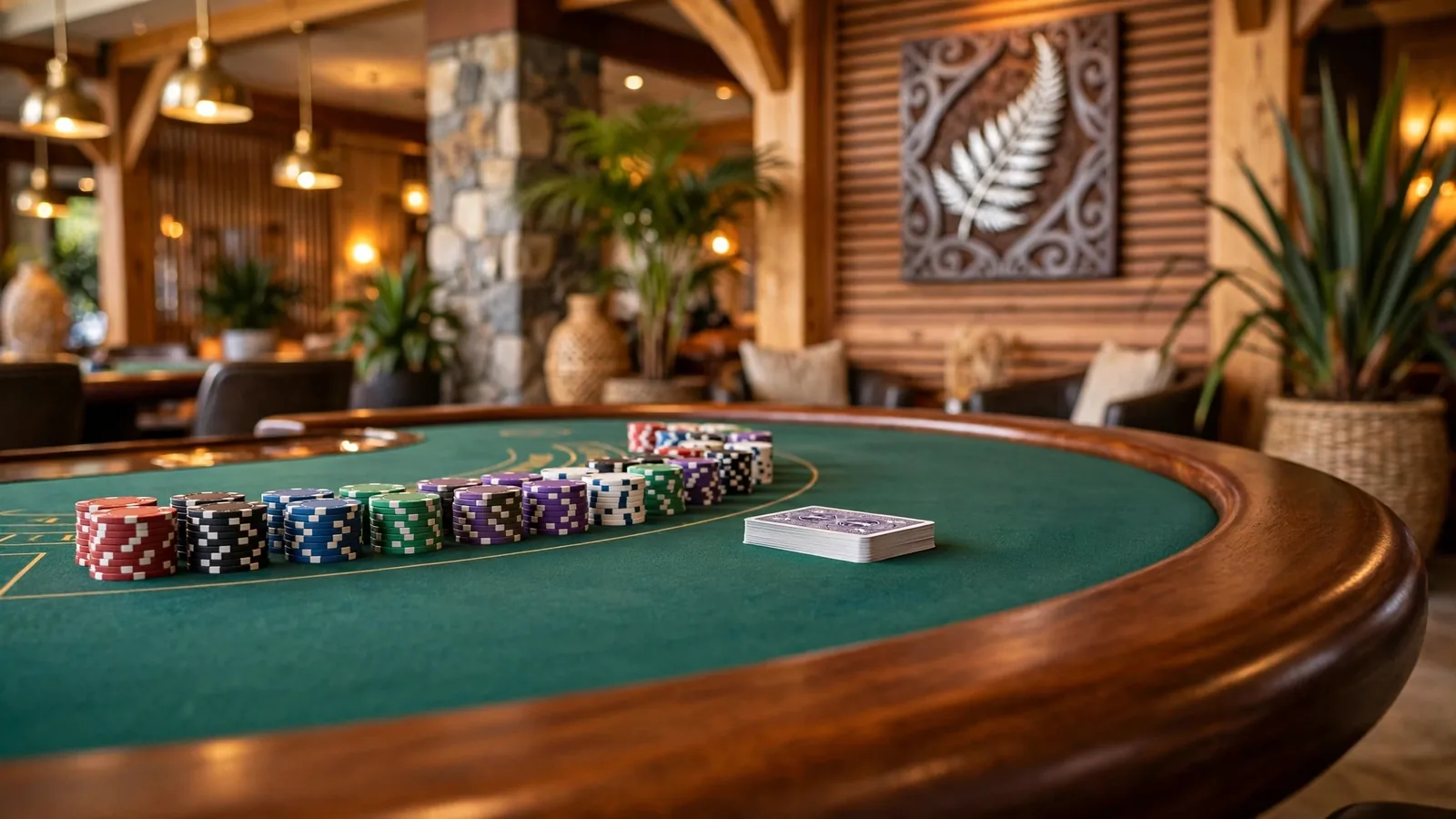
That pooled structure can make a progressive prize appealing, but it changes how the game’s return is divided. Part of each bet goes towards building the jackpot, leaving less of the wager allocated to the base game. As a result, progressive jackpot pokies have a lower base-game RTP than they would if that contribution were not being set aside.
This distinction matters when you compare a game’s ordinary play with its headline prize. The base-game RTP describes the return associated with the game outside the jackpot contribution; it does not mean the jackpot is certain to make up the difference for an individual player. A large shared prize can attract attention, but it does not turn each spin into a better-value bet or make a win predictable.
If you are considering jackpot pokies in New Zealand, look at the game information panel and note whether the advertised return includes the progressive component or refers to base-game play. The jackpot amount alone does not explain the underlying trade-off. You are weighing a lower return from the regular game against the possibility of a share in a prize that accumulates across casinos.

Treat that possibility as entertainment, not as a plan for recovering losses. Each spin remains uncertain, and the pooled jackpot does not change that. Before playing, decide what you can afford to spend and stop when you reach that limit.
Playing Pokies in New Zealand Dollars
When you look for pokies priced in NZ does not, by itself, tell you whether the payment is processed in that currency. If a transaction is converted, the exchange rate and any conversion fee can affect the amount charged to your account.
Before depositing, read the payment information and the terms covering currency conversion. Look for the currency used to process transactions, who performs any conversion, and whether a fee applies. If the details are unclear, ask the payment provider or platform for the amount and currency that will be charged before you confirm. Do not assume that a convenient NZ$ display means there will be no conversion cost.
Check your bank or payment account statement after a transaction as well. Comparing the original amount and currency with the final debit can help you spot a conversion charge. Keep in mind that the rate used at processing may differ from the rate you saw when deciding whether to deposit.

If you are comparing online pokies, treat currency support as a practical payment detail rather than a sign that a platform is suitable. Confirm the terms for the specific payment method you intend to use, since the currency available for one route may not apply to another. Also check how withdrawals are handled: a different processing currency can create another conversion.
Set a clear spending limit in NZ$ before you play, and include possible fees in the amount you are prepared to lose. If the total cost is not clear, pause rather than sending money and trying to work it out afterwards. A few minutes spent checking the currency and charges can prevent an avoidable shortfall in the amount credited to your account.
PayPal and Pokies Deposits
If you are considering PayPal for a pokies deposit, first confirm that it appears as an available payment option on the casino’s own cashier page. A payment method being familiar or widely used does not mean a particular site accepts it. Do not rely on an old article, a logo elsewhere on the site or another player’s experience as confirmation; payment options can differ between operators and may change.
Before sending money, read the deposit instructions and check the conditions attached to the transaction. Make sure the account details and payment route shown at checkout match what you intended to use. If PayPal is not listed there, do not try to route a payment through an alternative method on the assumption that it will be credited in the same way.
Deposits and withdrawals may not follow identical rules. Check which withdrawal methods are available before depositing, and whether the site’s instructions explain how funds can be returned to you. If a payment option is accepted for deposits but not offered for withdrawals, that difference matters when deciding whether to proceed. Keep a record of the transaction and any confirmation shown after payment.
A payment service does not establish that an online casino is trustworthy or provide a remedy if a dispute arises. Consider the payment terms alongside the site’s other conditions, and do not deposit until you understand them. If a transaction is declined or the instructions are unclear, contact the payment provider or the casino through its stated support channel rather than repeatedly attempting payment.

PayPal acceptance should therefore be checked directly at the point of deposit, not assumed from the phrase “PayPal pokies” or from information about another casino. The same care applies to any payment method: confirm that it is currently offered, understand the withdrawal arrangements, and only proceed if the terms are clear to you.
Licensing and Protections for Real Pokies
The rules for real pokies in New Zealand are changing, but a new licensing framework does not mean every offshore casino is covered by local protections. The Gambling Act 2003 bars online casinos from operating within New Zealand. The later Online Casino Gambling Act 2026 established the country’s first domestic licensing regime.
The Act came into force on 1 May 2026 and set a transition period through 1 December 2026. Online casinos that were already serving New Zealand customers before the Act took effect may continue during that period, subject to its transitional provisions. The full licensed regime is not expected to be operational until 2027, so the change is not an immediate switch to a fully licensed market.
A specialist review describes the framework as initially allowing up to 15 licences and identifies the Department of Internal Affairs as the regulator. It also describes requirements for licensed operators covering harm minimisation, advertising, age checks and tax contributions. Those obligations matter, but a licence does not remove the need to understand the protections available to you.
The practical gap is clearest with offshore play. Before the new Act, offshore online casino gambling was not licensed or supervised by a New Zealand regulator. Customers had no domestic government recourse if a dispute arose with an offshore website. New Zealand still has no specific regulator overseeing offshore online casinos, so local consumer protection agencies cannot resolve those disputes on your behalf.
That distinction matters when assessing what “real pokies NZ” means: a game may be accessible to you without the site being covered by New Zealand’s licensing system. During the transition, check whether an operator falls within the Act’s transitional provisions rather than assuming that operating openly means it holds a New Zealand licence. For any dispute, know which regulator, if any, has authority over the operator and what complaint route is available before depositing.
Created by the ”Casino Payment Tips NZ” editorial team.