
Roulette Strategies for New Zealand Players
 Available in US
Stake progressions can change how much is at risk, but they cannot alter spin probabilities; wheel rules shape the edge.

Table of Contents
- Why the Martingale Can’t Turn Roulette into a Sure Win
- The Wheel and Rules Matter More Than a Betting System
- What Roulette Strategies Can—and Can’t—Change
- Double-Bet Ideas and the Value of French Rules
- Reading the Wheel Before You Choose a Bet
- A “Best Strategy” in 2026 Means Managing the Edge
- Winning Big Is Not the Same as Improving Your Odds
- Roulette Strategy for New Zealand Players: Rules and Bonus Conditions
- D’Alembert, Line Bets and the Limits of Raising Your Stake
- Flat Betting and a More Controlled Session
Why the Martingale Can’t Turn Roulette into a Sure Win
The Martingale is a stake progression, not a way to predict the ball. In its familiar form, you choose an even-money bet and increase your stake after each loss, commonly by doubling it. A win is intended to recover the earlier losses and leave a small profit equal to the original stake. The appeal is easy to see: a losing bet seems to set up a larger recovery attempt.
But the next spin does not know what happened before. Roulette spins are independent, so previous results do not change the probability of outcomes on a future spin. Increasing your stake changes how much you stand to lose or win on that spin; it does not make the chosen result more likely. That distinction is easy to lose sight of while following a progression, especially when a run of losses makes the next planned bet much larger than the first.
The cost can rise sharply. After each loss, the Martingale calls for a bigger stake, so a losing run forces you to commit more money just to continue the plan. You may reach a point where the next required bet is beyond your available budget or the table’s permitted stake. At that point, the strategy cannot complete its intended recovery sequence. If a win eventually arrives, its gain may only cover the accumulated losses and provide the modest profit the initial stake was meant to earn.
That asymmetry matters: several small wins can be outweighed by one extended losing sequence. The system can make results look steady for a while, because successful recovery attempts may produce frequent small gains. Those gains do not make the progression reliable. The larger the required stake becomes, the more painful another loss can be.
A reverse Martingale changes the direction of the progression. Instead of raising the stake after a loss, you increase it after a win, seeking to make more while a winning run continues. A loss generally prompts a return to the starting stake. This can limit the amount exposed during a losing sequence compared with continuing to escalate after losses, but it does not make winning spins more likely. A winning run can end at any point, and an increased stake placed just before that happens can give back gains from earlier wins.

Both systems can be presented as a safe Martingale strategy or an advanced roulette strategy, but those labels do not change their mechanics. They are ways to organise stake changes around results, not safeguards against losing. A chart can show what stake to place next under a chosen progression, yet it cannot show which outcome the wheel will produce. Treat a roulette strategy chart as a record-keeping aid, not a forecast.
Before using any progression, consider the largest stake it could ask you to place and whether you would be willing to lose that amount. If continuing depends on having enough money to recover a run, the plan carries a risk that a string of early wins can conceal. Stopping when a limit is reached is more important than following a sequence just because its next step is written down.
The practical warning is not that every Martingale session must end badly. It is that a run of wins can make the approach feel dependable, while a run of losses can demand increasingly costly bets without improving the chance of the next spin. A reverse progression has a different pattern of exposure, but the same independence of outcomes applies. Neither turns roulette into a sure win.
The Wheel and Rules Matter More Than a Betting System
Before you compare roulette strategies, check which wheel the game uses. European and American Roulette may look similar on screen or at a table, but their pockets are not the same. That difference changes the house edge before you place a bet, so a staking plan cannot be judged without knowing the game’s rules.
European Roulette has 37 pockets: one is zero and the rest are numbered. Its house edge is 2.70%. American Roulette has 38 pockets, with both a single zero and a double zero, and its house edge is 5.26%. The additional pocket gives the house a larger advantage. For the same kind of bet, the American layout is therefore less favourable to the player.
37 pockets, one zero, and a house edge of 2.70%.
38 pockets, a single zero and a double zero, and a house edge of 5.26%.
That comparison is a useful starting point if you are looking for a single-zero roulette game or trying to find a more secure way to play. The single-zero layout has the lower house edge of these two standard versions, but that does not make a session secure or guarantee a return. It means only that the game’s built-in advantage is smaller under the stated rules.
A strategy based on choosing particular numbers, sections of the layout or combinations of bets does not change how many pockets the wheel has. Nor does a familiar pattern—such as varying stakes according to a sequence—alter the difference between the two house edges. If you are comparing a supposed long-term approach, first identify the roulette version it assumes. Advice developed around European Roulette may give a misleading impression when applied to American Roulette.
The same caution applies to claims about a high-percentage system or a particularly profitable method. A strategy name cannot tell you whether the game is European or American, and it cannot replace checking the table rules. The wheel’s pocket count is the more concrete detail: European Roulette has one zero, while American Roulette has a single zero and a double zero. If the game information does not make the layout clear, do not assume the more favourable version.
Online, the title of a game may be visible before you open it, but the rules are still worth checking. Live and digital tables can present the layout differently; what matters for this comparison is the number of pockets and zeros, not the appearance of the interface. A game described as immersive, or one that lets you place bets across much of the board, does not thereby acquire different odds. The underlying wheel remains the key detail.
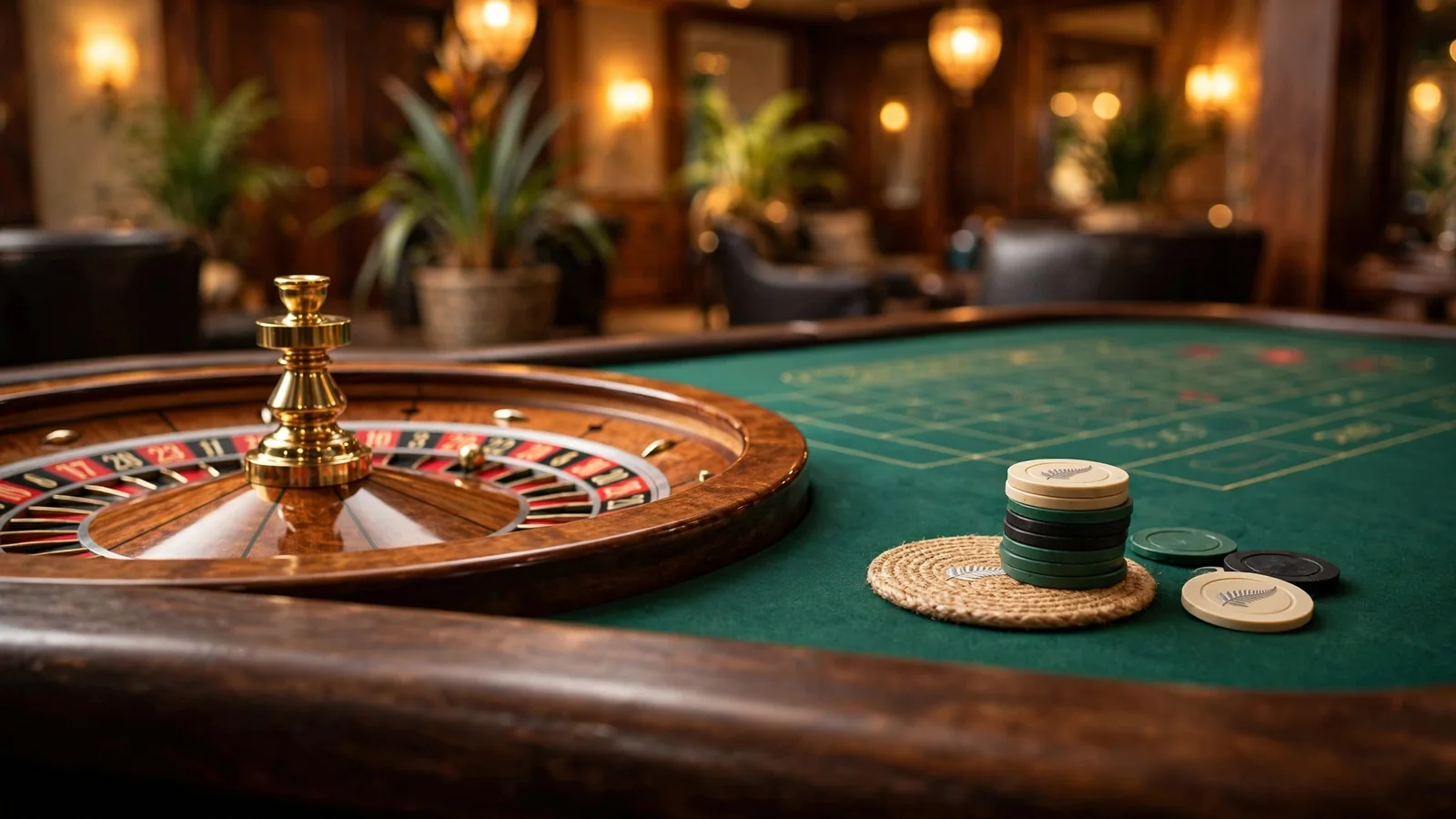
This distinction also puts questions about a specific stake amount or a numbered betting sequence in perspective. Those describe how someone chooses to wager, not which wheel is being played. There is no need to settle on a progression before establishing whether the table is European or American. Start with the layout and its house edge, then assess any proposed approach against that baseline.
For a player comparing tables, the practical takeaway is straightforward: read the game rules, identify the zero pockets, and note the stated house edge. European Roulette’s 37-pocket layout carries a 2.70% edge; American Roulette’s 38-pocket layout carries a 5.26% edge. That is a meaningful difference in the game itself, independent of the label attached to a betting plan.
What Roulette Strategies Can—and Can’t—Change
A roulette strategy can give your decisions a structure. It might set out which bets you make, when you stop, or how you keep track of your spending. That can make a session feel more deliberate, but it does not make the wheel predictable. Whether a strategy “works” depends on what you expect it to do: organise your play is possible; reliably forecast results or ensure a profit is not.
Each spin is independent. The result of the previous spin does not change the probability of what can happen next. A run of one colour, for instance, does not make the other colour due. A plan based on recent results may tell you what to bet, but it cannot turn those results into evidence about the next spin.
Each spin is independent, meaning the result of a previous spin does not change the probability of what can happen next.
This distinction matters when a strategy is described as working or low risk. Those labels can refer to different things. A plan may help you avoid changing bets impulsively, or make it easier to follow a spending limit you chose in advance. That is control over your own decisions, not control over the outcome. If “low risk” means that a bet cannot lose, no roulette strategy can provide it: every real-money bet can lose.
Nor does a complicated pattern have special predictive power simply because it uses a sequence, a chart or a rule for choosing numbers. A live table and an online table still present random spins. Watching a dealer, tracking past results or changing your selection after a win does not give you information that alters the next spin’s probability. A plan can be consistent without being predictive.
It is also useful to separate how often a game returns money from whether a particular session will end ahead. A specialist roulette review reports payout percentages of 97.30% for European roulette and 94.70% for American roulette. These figures describe the games’ reported long-run return, not a promise about an individual player or session. They do not mean that a strategy can claim the difference as a personal return, or that a short run will follow the same pattern.
A workable personal plan, then, is one whose purpose is modest and clear. You can decide what kinds of bets you are comfortable making, set a spending boundary and choose when to stop. Those choices may help you avoid chasing losses or making rushed decisions, but they cannot improve the mathematical chance attached to a spin. The plan’s value lies in helping you act consistently with your own limits.

Be wary of claims of a “100% working” system or a live method that supposedly identifies a winning sequence. Such claims blur the line between managing your behaviour and predicting random outcomes. A strategy can shape your choices; it cannot make those choices certain to pay. If the distinction is clear before you start, it is easier to assess a betting plan without mistaking structure for an advantage.
Double-Bet Ideas and the Value of French Rules
A double-or-nothing approach sounds simple: after a loss, increase the next stake in an attempt to recover it; after a win, stop or reset. The sequence can make a session feel structured, but it does not make a winning spin more likely. Raising a stake changes how much you stand to gain or lose on that spin, not the wheel’s result.
The same distinction matters when you consider a roulette double-up strategy. A larger wager may recover earlier losses if it wins, but it also puts more money at risk at once. If the next bet loses, the shortfall grows. There is no stake pattern that guarantees the recovery will arrive before your available session funds run out.
“Double ball” can refer to a roulette game variant, while “double up” describes a way of changing your stake. Those are not interchangeable ideas. A game’s name does not, by itself, tell you whether it has a particular payout rule or gives you a better chance of winning. Check the table’s stated rules before betting, and do not infer an advantage from the label.
Risk of Loss
No stake pattern guarantees recovery before your available session funds run out, and every real-money bet can lose.
What French rules change
French Roulette uses a single-zero wheel layout, as European Roulette does, but may include rules called La Partage and En Prison. Their value is specific: they affect eligible even-money outside bets when zero lands. They are not general protections for every kind of wager, and they do not prevent a losing result.
With La Partage, half of an eligible even-money stake is returned when zero appears; the other half is lost. Under En Prison, the stake is held for the next spin. If that spin wins, the original stake is returned without extra winnings; if it loses, the stake is collected. Before placing a bet, confirm that the table applies the rule and understand which option is in force.
When either rule applies, the house edge for French Roulette falls to 1.35% on the eligible basis. That is a meaningful difference in expected loss over time, but it is not a promise that a particular session will end ahead. A run of results can still leave you down, and changing stakes cannot turn the rule into a guarantee.
This is why searches for the highest-winning or most successful roulette strategy can lead to two different questions. One is how to arrange your bets; the other is which table rules apply. A double-or-nothing sequence addresses the first, while La Partage and En Prison affect the treatment of a zero on qualifying bets. Conflating them can make a stake progression seem more powerful than it is.
If you are comparing online tables, read the rules attached to the exact game rather than relying on a general description of French Roulette. Look for whether La Partage or En Prison applies, and whether your chosen bet qualifies. Then decide on a stake you can afford to lose without expecting a progression to rescue it. No online roulette winning strategy can ensure a profit: each real-money bet remains exposed to an unfavourable result.

Reading the Wheel Before You Choose a Bet
Roulette presents two layouts that can be easy to confuse. The wheel shows pockets arranged around its rim; the table shows numbers in a grid, alongside other betting areas. Called bets are grouped by where numbers sit on the wheel, not by where they appear on the table. That distinction matters when you are learning a bet name or trying to place it on screen.
A table bet is selected from the layout in front of you. A street bet, for instance, is placed on a row of numbers on the table. The word “street” describes that table grouping; it does not mean a run of neighbouring pockets around the wheel. So if you are studying roulette streets, keep the table’s rows separate in your mind from wheel-based called bets.
Wheel calls refer to sections or relationships between pockets around the wheel. Their names may be displayed in a menu, printed on a table, or explained by a live dealer. A bet with a wheel-based name is not simply a bet on numbers that look close together on the felt. If the distinction is unclear, pause to read the table guide before confirming a wager. The label alone may not show you which pockets are included.
- Learn how table areas correspond to bets
- Understand how called bets are defined
- Use free practice to learn the interface
- Click a label you do not understand
- Confuse table groupings with wheel sectors
- Rely on visual position alone in the grid
This is useful whether you are playing online or at a physical table. In an online game, the interface may let you select a named call directly, or require you to place chips on a special area of the layout. The display can make the process look simple, but it is still worth checking what the selection covers. In live play, you may hear a dealer call or see a marked betting area; ask for clarification rather than relying on the visual position of numbers in the grid.
Outside bets such as red or black are visually distinct from number groupings. They are broad choices shown in their own areas on the table. Their position on the felt does not describe a wheel sector. If you are considering a black-and-red approach, identify the relevant table area and make sure you understand what the selected option means in that game. The layout helps you place a bet; it does not make the colour sequence predictable.


Some players arrive with a method name they have seen elsewhere, including a reference to “Fisher” roulette. Treat unfamiliar labels as a prompt to find a clear explanation of the bet or selection involved, not as proof that the method identifies where the ball will land. A guide should say plainly whether it is describing table placement, a wheel-based call, or a pattern for choosing stakes. Those are different things, and mixing them can lead to a wager that is not the one you intended.
For an introduction to roulette strategy, start by learning how the table areas correspond to bets and how called bets are defined. The best approach to an online game is not to click a label you do not understand, especially when the wheel and table are shown side by side. If you are using free practice to learn the interface, take time to inspect the bet information before placing anything. Clear terminology will not predict a spin, but it can help you avoid a preventable misunderstanding about what you have selected.
A “Best Strategy” in 2026 Means Managing the Edge
Roulette strategies can help you structure your play, but they do not change the game’s underlying odds. Use this New Zealand-focused list as a reference when considering where to play in 2026.
Payout speed: 1-3 business days Wintino lists a payout speed of 1–3 business days. This gives you a stated timeframe to consider when reviewing the operator.
License: Curaçao Gaming Authority, licence no. OGL/2024/165/0185 BitStarz lists a Curaçao Gaming Authority licence, no. OGL/2024/165/0185. You can use that licensing detail as one point of reference.
License: Tobique Gaming Commission, licence no. 0000002 Ricky Casino lists a Tobique Gaming Commission licence, no. 0000002. That licence information is the available detail to consider.
License: Tobique Gaming Commission, licence no. 0000064 Neospin lists a Tobique Gaming Commission licence, no. 0000064. You can take this stated licensing detail into account when reviewing it.
License: 07017519840 · Payout speed: 1-3 business days Zotabet lists licence number 07017519840 and a payout speed of 1–3 business days. These are the available details to consider when reviewing the operator.
License: Malta Gaming Authority, licence no. MGA/B2C/394/2017 N1 Casino lists a Malta Gaming Authority licence, no. MGA/B2C/394/2017. You can use this information as a reference when considering the operator.
Payout speed: 1-3 business days Lamabet lists a payout speed of 1–3 business days. This is the available detail to consider when reviewing it.
License: Tobique Gaming Commission, licence no. 0000091 7Bit Casino lists a Tobique Gaming Commission licence, no. 0000091. You can take this stated licensing detail into account.
License: Malta Gaming Authority, licence no. MGA/B2C/370/2017 Play Grand lists a Malta Gaming Authority licence, no. MGA/B2C/370/2017. This licensing information is the available detail for your review.
There is no stake pattern that turns roulette into a dependable way to win. If you are looking for the most successful approach, separate two questions: what can you control, and what cannot be changed by your choices? You can choose which table rules to play under and how to organise your bets. You cannot make a winning result more likely by finding a special sequence of wagers.
For even-money outside bets, French Roulette offers the most favourable rules when La Partage or En Prison applies. If zero appears, La Partage returns half of an eligible stake, while En Prison holds the bet for the next spin under its own settlement rule. These provisions reduce the cost of zero for those bets. They do not protect other bet types, and they do not guarantee that a session will end ahead.
The table rules matter because the house edge is built into the game, not into your choice of staking plan. A single-zero European table, for instance, has a house edge of 2.70%. French rules can improve the position for eligible even-money wagers, but that advantage is specific to those rules and bets. A table with different rules may leave you with a less favourable starting point, regardless of how carefully you place your chips.
Best Strategy
Prioritise choosing tables with more favourable rules over searching for a predictive betting formula.
This is why a “best roulette strategy” is better understood as a decision about the conditions of play, not a formula for predicting the next result. If your aim is to limit the built-in disadvantage, compare the rules first. Then decide whether the bets available suit the session you intend to have. A staking method can make your choices more orderly, but it cannot make an unfavourable table favourable or erase the edge.
The idea of a “best strategy ever” can be tempting because it suggests that someone has found a pattern others have missed. But roulette outcomes do not become predictable through a clever arrangement of stakes. A recent run of results does not tell you what the next spin will bring, and a plan that feels disciplined is not the same as an advantage over the wheel.
If you choose to play, keep the distinction clear: better rules can reduce the disadvantage on eligible wagers; no betting system can promise a profit. Treat any stake plan as a way to structure your decisions, not as evidence that a win is due. Every real-money bet can lose, even when you have chosen a lower-edge option.
Winning Big Is Not the Same as Improving Your Odds
A large advertised prize can make a roulette game look more attractive, but the size of a possible payout and the chance of receiving it are different things. A high payout describes what a winning bet may return. It does not show how likely that bet is to win, or whether the game offers better value over time.

Browse New Zealand-focused casino game topics, including roulette, baccarat, blackjack, pokies, slots, craps, keno and…


Payout percentage is a way to express the proportion of stakes a game is expected to return across play. It is not a promise about what you will receive in a particular session. A player can win a substantial amount on one spin and still face a game whose overall return is less favourable. Conversely, a higher payout percentage does not guarantee that you will win any individual bet.
For comparison, a specialist roulette review reports payout percentages of 97.30% for European roulette and 94.70% for American roulette. Those figures describe the games’ expected returns, not the probability that a particular player will finish ahead. The distinction matters when a format advertises an especially large top prize: the headline figure alone cannot tell you whether the underlying game is a sound choice.
A specialist review also reports a payout percentage ranging from 92.86% to 96.19% for 100/1 roulette. That span is a reason to check the rules and paytable for the specific version, rather than treating the name or its biggest possible win as enough information. A striking payout can coexist with a lower expected return; it does not, by itself, make a bet more likely to succeed.
If you are looking for a way to win big, separate two questions before playing: what does a winning bet pay, and what does the game return across all bets? The first concerns the possible reward. The second gives a more useful indication of value, though it still cannot predict your outcome. Roulette is random, and a promising paytable cannot turn a possible win into a sure one.
Attention: A high advertised payout describes what a winning bet may return, but it does not increase the likelihood of that bet winning.
This is also why an electronic roulette machine does not call for a special method that can make its large payouts more attainable. The display or format may present the game differently, but a payout figure is not a signal about what the next result will be. No staking pattern can make a high prize more likely simply by being repeated.
Before choosing a game, read its payout information alongside its rules. If the return is unclear, do not assume that a bigger advertised win compensates for it. A large prize is an outcome the game may allow; it is not evidence that your odds have improved.
Roulette Strategy for New Zealand Players: Rules and Bonus Conditions
For New Zealand players, a sensible approach starts with understanding the changing legal framework, not with choosing a betting system. The Online Casino Gambling Act 2026 took effect on 1 May 2026, creating the country’s first domestic licensing regime for online casino gambling. New Zealand still prohibits online casinos from being based domestically.
The Department of Internal Affairs is the primary gambling regulator and oversees the online casino licensing framework. The Gambling Commission hears and decides casino licensing applications, issues online casino licences and approves changes to licence conditions. These responsibilities are distinct: the Department oversees the framework, while the Commission handles licensing decisions.


The transition period runs from 1 May to 1 December 2026. Providers that were already serving New Zealand customers before the Act took effect may continue during that period, subject to the transitional provisions. The full licensing regime is not expected to be operational until 2027. Before the new Act, offshore online casino gambling was not licensed or supervised by a New Zealand regulator, and customers had no domestic government recourse. Playing through an offshore site was not, by itself, a basis for a fine or criminal prosecution of the customer.
Read bonus conditions before accepting
A bonus is not extra cash without conditions. If an offer is available to you, read its terms before activating it and consider whether the requirements fit your plans. Bonus money must be wagered 50X within 30 days. Winnings from free spins must be wagered 50X within 7 days. A withdrawal request voids all active or pending bonuses.
Other conditions can include eligibility rules, which games contribute towards wagering, expiry terms and restrictions on withdrawals. These details may affect whether bonus funds or related winnings can be withdrawn. Do not treat a bonus as a reason to keep playing or as a way to make a roulette strategy more effective.
No progression system can make roulette predictable, and accepting an offer does not change that. If you choose to play, keep your decisions separate from promotional conditions: know what you are agreeing to, avoid wagering to meet a requirement if it would lead you beyond your own limits, and do not risk money you need for other purposes. A strategy can help you organise your choices, but it cannot remove the financial risk of a real-money bet.
Bonus Conditions
- Read all terms before activating the offer
- Check the wagering requirements (e.g., 50X)
- Verify the time limits for wagering
- Identify which games contribute towards wagering
- Confirm the restrictions on withdrawals
D’Alembert, Line Bets and the Limits of Raising Your Stake
The D’Alembert approach changes your stake in small steps rather than making a sharp jump after a loss. A player typically raises the next stake after losing and lowers it after winning, aiming to make the session’s bets feel more measured. The exact step size is a choice, not a feature that changes the roulette wheel. A run of losses can still build up the amount at risk, while wins do not ensure that earlier losses will be recovered.
Line bets are a separate choice: they cover a group of numbers on the layout rather than a single number. A line bet can change how many outcomes are covered and the payout attached to a win, but it does not make the covered numbers more likely to appear. Pairing line bets with a progression only combines two decisions—what to cover and how much to stake. It does not turn either into a prediction.
The same distinction matters if you are considering a system that doubles a stake, or a sequence-based approach such as Labouchere. These methods organise the order or size of bets. They cannot make independent spins follow a pattern, and a planned sequence may require stakes you are unwilling or unable to place when results go against you. Set a stopping point before play, and do not treat a system’s neat arithmetic as evidence that it will produce a profit.
Check the specific game rules before choosing a table. Mini Roulette has fewer pockets than standard European Roulette, but its house edge is higher: 7.89%. With La Partage, that edge falls to 3.85%. This is a rule-based difference, not a benefit created by D’Alembert, a line bet or a stake progression. A betting pattern cannot compensate for a less favourable game.


If you try a step-based method, decide in advance what stake you will use and when you will stop. Keep track of the total placed, not only the current bet. A smaller increase may make changes feel gradual, but it can still leave you exposed if you continue through losses. Roulette results remain random, and every real-money bet can lose. Do not risk more than you can afford to lose.
Flat Betting and a More Controlled Session
Flat betting means choosing a stake and keeping it the same from spin to spin, rather than increasing or reducing it in response to results. You might use it with an outside bet or another selection, but the defining feature is the steady stake—not the type of bet.
This approach can make your spending easier to follow. When each wager is consistent, you can see how much you have put into play without having to track a changing progression. Decide beforehand what you are willing to spend and when you will end the session; do not raise your stake to recover losses or continue simply because you are ahead. A fixed stake is a way to organise play, not a way to make losses predictable.


A flat-betting roulette strategy does not change the chance of a result, and a run of wins does not make the next spin more likely to win. It also cannot remove the house edge. The term “safest” can be misleading: keeping stakes steady may help you avoid sudden increases in bet size, but no roulette betting strategy makes real-money play safe or profitable.
The rules still matter. On a French table, La Partage can reduce the effective house edge for eligible even-money bets when zero lands. That changes the treatment of those bets in that situation; it does not turn a steady staking plan into a guarantee.
If you choose to play, keep the stake at a level you can afford, and stop if the session is no longer within the amount you set aside. Avoid treating a flat stake as permission to play longer or as evidence that losses are unlikely. Every real-money bet can lose, and you should never risk more than you can afford to lose.
Created by the ”Casino Payment Tips NZ” editorial team.