
Blackjack Tables in New Zealand: Rules and Play
 Available in US
Table layouts, hand decisions, betting options and rule checks shape how blackjack rounds play.
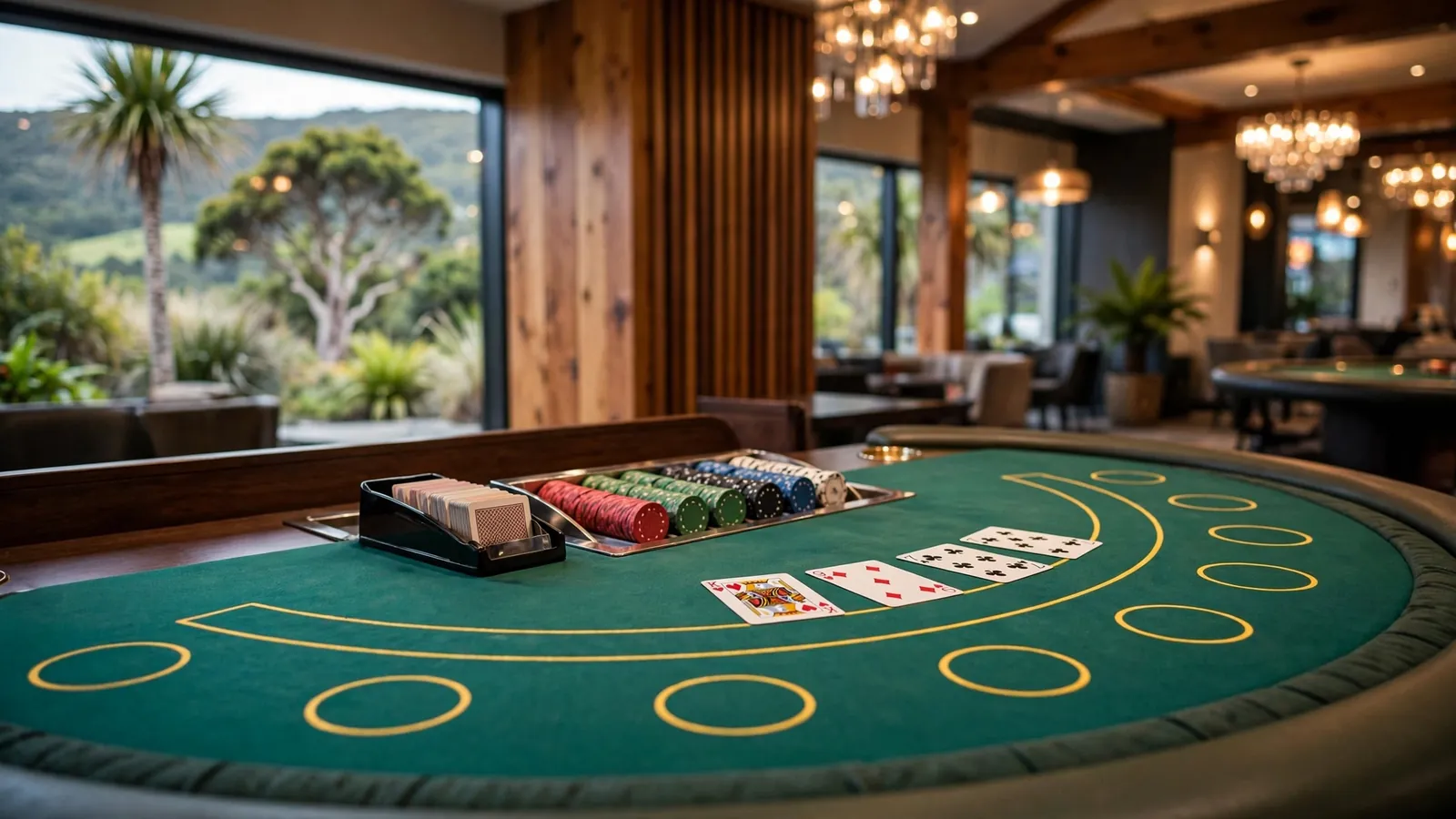
Table of Contents
- How a Casino Blackjack Table Works
- Blackjack Rules and Payouts That Change the Table
- Online Blackjack Tables in New Zealand in 2026
- Use Basic Strategy Without Treating It as a Guarantee
- Betting, Chips and Electronic Blackjack
- When to Hit, Stand, Double Down or Split
- Choosing a Seat at the Blackjack Table
- Reading a Blackjack Card Chart
- A Blackjack Cheat Sheet for the Table
- Check the Blackjack Table Limit and Rules Before You Sit
How a Casino Blackjack Table Works
A blackjack table is a contest between you and the dealer, not a competition among the people seated around the table. The aim is to finish closer to 21 than the dealer without going over. Other players may be taking their turns at the same time, but their hands do not determine whether your hand beats the dealer’s.
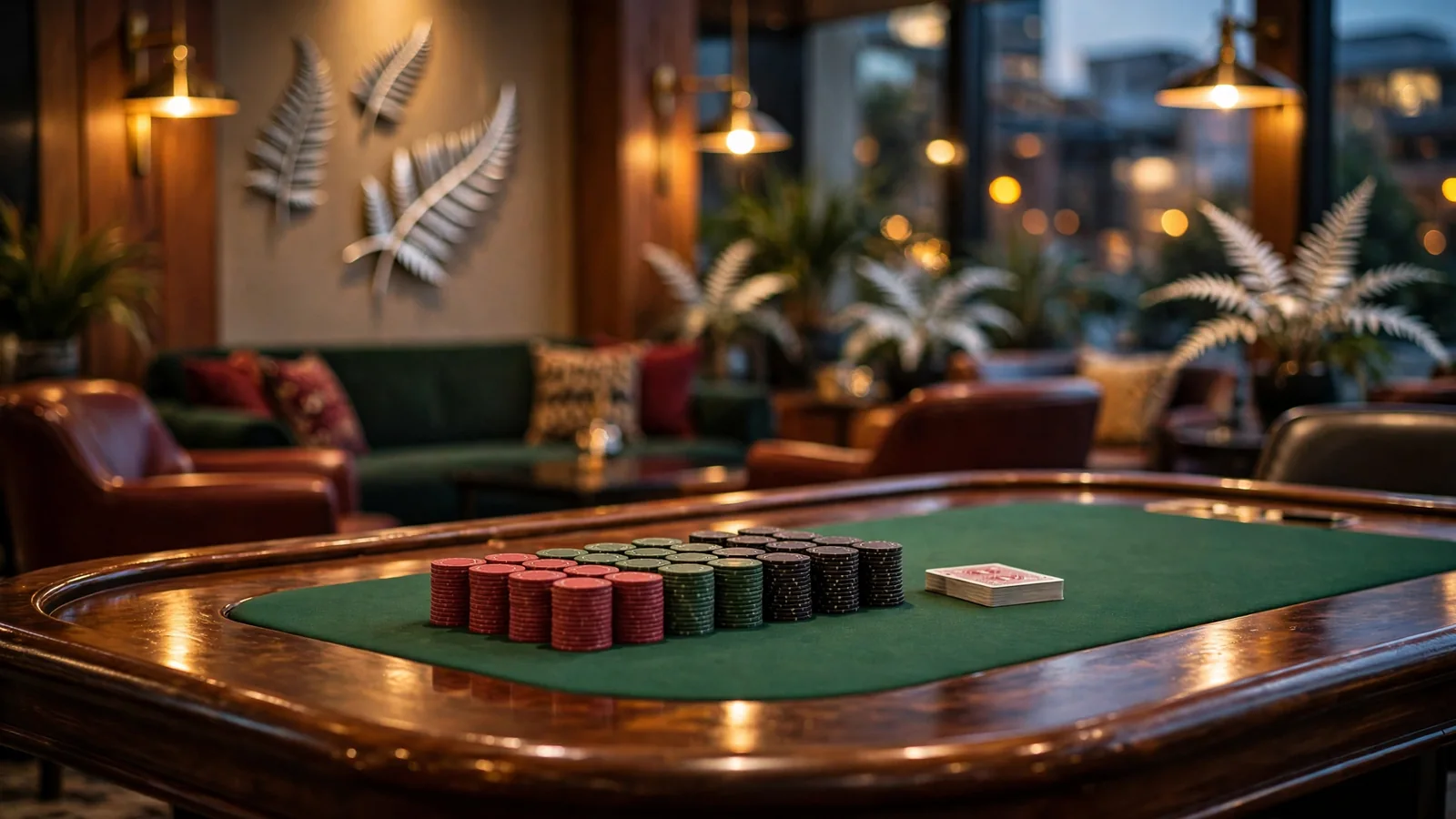
At a casino blackjack table, the curved edge is divided into places for individual players. Each place has a marked area for a wager and a space where that player’s cards are set. The dealer stands opposite the players, with the cards and the working area in front of them. The layout helps everyone see which wager and hand belong to which seat. Exact markings and equipment can differ from table to table.
What happens at a live table
In live blackjack, the cards are physical cards handled at the table. You can watch the dealer distribute them, see your own hand and follow the dealer’s actions in person. That visible process is part of what distinguishes a live game from one in which a computer displays the cards.
Once a hand is under way, the dealer manages the round while each player considers their own hand. The dealer’s hand is the shared point of comparison: each player is trying to finish nearer to 21 without exceeding it. When the players have completed their turns, the dealer’s hand is resolved and the outcomes are settled against it. You are not trying to beat the person in the next seat, even if that person’s decisions look different from yours.
At a busy table, several hands may be in progress around the curved layout. The dealer addresses each player in turn, and the position of the cards makes it easier to keep hands separate. You can follow the action by watching the dealer and the cards rather than trying to track what every other player is doing. If you are unsure whether the dealer is addressing you, pause and look for a clear cue before acting.
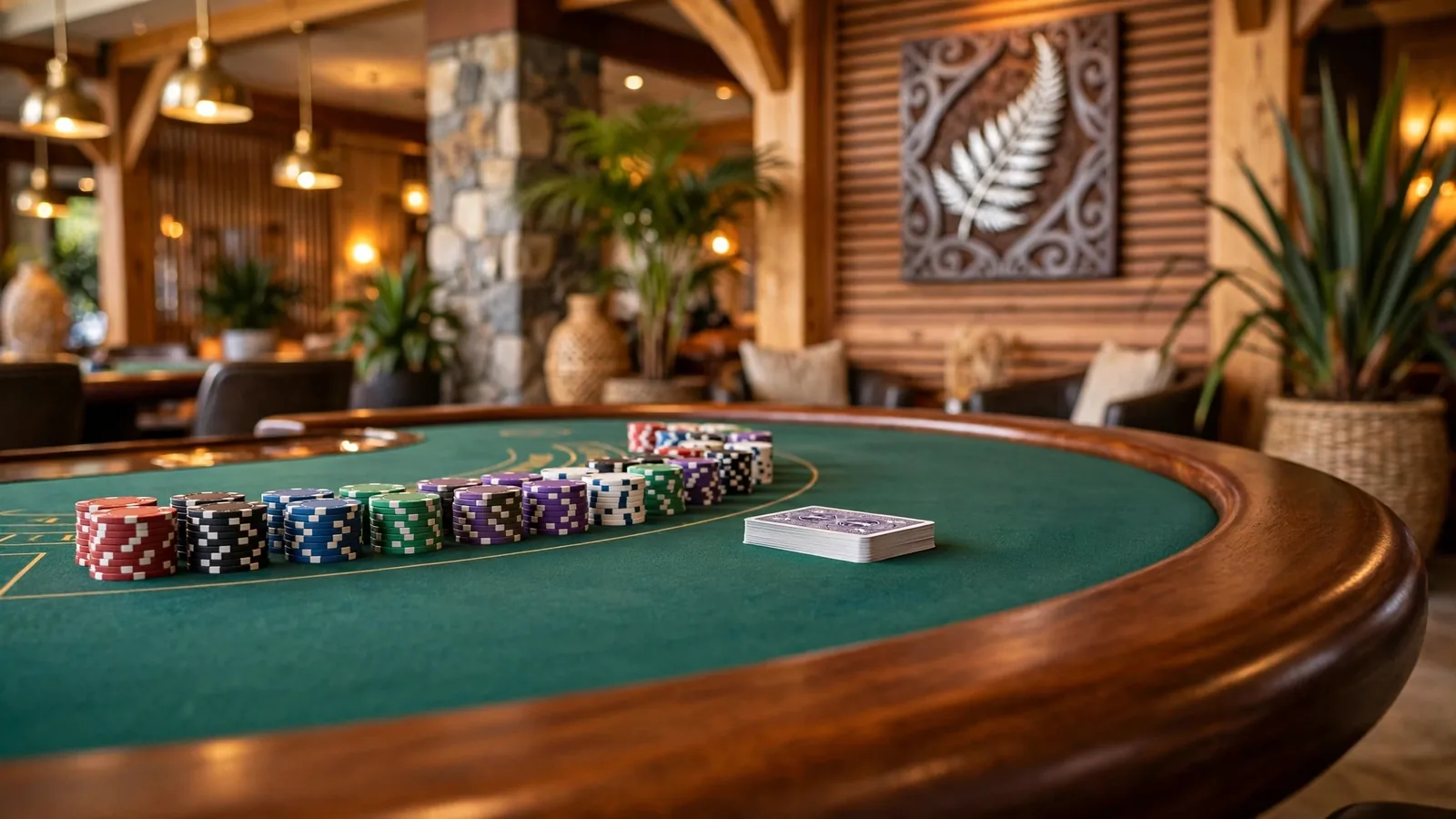
The atmosphere can feel more social than playing alone, but the pace is still set by the table. Players may take a moment to consider their hands, and the dealer continues the round once the required decisions have been made. If you have not played before, observing a hand before joining can help you understand where cards are placed and how attention moves from one seat to another. It also gives you a chance to see whether the pace feels comfortable.
Understanding the layout
The layout is practical rather than decorative. A marked betting area indicates where a player places a wager; the hand is dealt into the space associated with that seat. The dealer’s work area is separate, so the dealer can manage the cards and compare the completed hands. Keeping cards and wagers in their designated places helps avoid confusion, particularly when more than one person is playing.
You do not need to memorise the layout before sitting down. Take a moment to look at the table and follow what the dealer does. If a marking or procedure is unclear, ask before the round begins. A clear question is easier to handle before cards are being dealt than in the middle of a decision. The dealer can clarify how that table operates, while the printed layout gives you a visual guide to the spaces in front of you.
A 21 blackjack table can look intimidating when you first approach it, especially if several people are already playing. The central idea remains simple: your result is compared with the dealer’s, and going over 21 means you have exceeded the target. You do not need to follow every other player’s hand to understand your own position. Pay attention to the cards in your area and to the dealer’s prompts.
Playing through a live stream
A live-dealer game brings the physical table to a screen. The dealer uses actual cards, and a camera shows the table, giving the game a similar visual format to an in-person casino table. You make decisions through the online interface rather than speaking or gesturing across the table. The stream can introduce a delay, so the action may not feel as immediate as sitting in the room; some live games may also require higher bets.
“Live” in this context refers to the presence of a real dealer and physical cards, but it does not guarantee the same speed or feel as playing in person due to potential stream delays.
That means “live” describes the dealer and cards, not necessarily the speed or feel of playing in person. You are watching a real table through a stream, and the interface becomes the route for taking part. Before joining, check that you can see the cards and understand how the game indicates whose turn it is. A slow or unclear stream can make it harder to follow the action, even though the cards themselves are real.
A free casino blackjack table, where available, can let you see how a digital table is presented without wagering. It will not reproduce every part of sitting at a physical table: there may be no room atmosphere, and the dealer’s interaction is not the same as being across the felt. Still, it can help you become familiar with the visual arrangement before deciding whether a live setting suits you.
Whether you are seated in a casino or watching a live table online, the useful starting point is the same: identify your own hand, follow the dealer’s cues and remember that the dealer is your opponent. The other players share the table, but each hand is resolved in relation to the dealer.
Blackjack Rules and Payouts That Change the Table
The same hand can be treated differently from one blackjack table to another because the rules are not identical. Before you play, check how the cards are valued, what actions are permitted, how a natural blackjack is paid, and what the dealer must do on a soft 17. Those details shape the game; the table’s name alone does not tell you which rules apply.
Number cards count at their face value. A jack, queen or king counts as 10, while an ace can count as either 1 or 11, depending on which value helps the hand without taking it over 21. A hand containing an ace counted as 11 is called a soft hand. If the ace must count as 1 to keep the total from exceeding 21, the hand is hard. This distinction matters when reading the rules, particularly the instruction about a dealer’s soft 17.
Actions and conditions
The standard player actions are hit, stand, double down and split. Hitting means taking another card; standing means keeping the current hand. Doubling down lets you increase your wager under the table’s conditions and receive a card, while splitting can turn a pair into separate hands. The precise conditions for these choices can differ, so look at the table rules before assuming an action is available in a particular situation. Some games also offer surrender, which lets a player give up a hand under specified conditions.
This is why a blackjack table guide should be more than a list of card values. It should help you identify the rules that affect your hand and the payout terms that apply. If you are comparing tables, read the rules shown for that specific game rather than relying on a general description of casino blackjack table rules.
Attention Do not rely on general descriptions of casino blackjack; always check the specific rules and payout terms of the table you are using, as they can vary.
Natural blackjack and payout wording
A natural blackjack is an opening hand made from an ace and a card worth 10. It is not the same as reaching 21 with several cards, and its payout may be treated differently from an ordinary winning hand. A specialist review described a natural blackjack payout of 3:2 at one table and 6:5 at some others; treat those as distinct reported terms, not as a settled rule for New Zealand tables. Check the payout displayed for the game you are considering.
The ratio tells you how a qualifying natural is paid in relation to the original wager. A lower payout changes what you receive for that hand, even though the cards and the target remain the same. Do not assume that a rule described as “blackjack pays” applies to every winning total: the wording should make clear whether it refers specifically to a natural. If the payout display is unclear, pause and read the game rules before placing a wager.
Dealer rules and game variations
A soft 17 is a dealer hand totalling 17 with an ace counted as 11. The table may require the dealer to hit it or to stand. That instruction is separate from the player’s choices, but it affects how the hand proceeds. A specialist review also notes that deck count, the dealer’s soft-17 decision, surrender availability and blackjack payouts can vary between games. Treat these details as table-specific, not as universal casino blackjack rules.

The number of decks is worth checking alongside the payout and dealer instructions. A game description may show that information in its rules panel or table details. If the rules are not visible before play, do not infer them from the appearance of the cards or from another version of blackjack. Variants can use different combinations of rules, and a change in one condition can affect how the game plays.
A search for “blackjack table prices” may also lead to unclear wording. In a casino setting, distinguish the amount needed to participate from the game’s payout rules: neither tells you the other. Check the posted table terms and the rules for the specific game, rather than treating a displayed price or stake as a full description of the table.
If an offer is involved, read its fine print on a trustworthy site before playing with real money. Blackjack may count differently toward wagering requirements, and maximum-bet rules can apply while wagering. Set a budget you can afford to lose, and do not chase losses. Insurance is another optional decision shown at some tables; it is not a routine choice for most players, and you should understand its terms before considering it.
Online Blackjack Tables in New Zealand in 2026
If you’re looking at blackjack tables in New Zealand in 2026, this list gives you a starting point for checking what is known about each operator. Confirm the table options and terms directly before you choose.
Payout speed: 1-3 business days The stated payout speed is 1–3 business days. You can use that as one detail to consider, though no other operator information is provided here.
License: Curaçao Gaming Authority, licence no. OGL/2024/165/0185 The listed licensing detail is Curaçao Gaming Authority licence no. OGL/2024/165/0185. You can use it as a reference when checking the operator’s licensing information.
License: Tobique Gaming Commission, licence no. 0000002 The listed licensing detail is Tobique Gaming Commission licence no. 0000002. You can use it as a reference when checking the operator’s licensing information.
License: Tobique Gaming Commission, licence no. 0000064 The listed licensing detail is Tobique Gaming Commission licence no. 0000064. You can use it as a reference when checking the operator’s licensing information.
License: 07017519840 · Payout speed: 1-3 business days The available details list the identifier 07017519840 and a payout speed of 1–3 business days. You can consider the payout information while verifying what the identifier refers to.
License: Malta Gaming Authority, licence no. MGA/B2C/394/2017 The listed licensing detail is Malta Gaming Authority licence no. MGA/B2C/394/2017. You can use it as a reference when checking the operator’s licensing information.
Payout speed: 1-3 business days The stated payout speed is 1–3 business days. You can consider this detail when assessing the operator; no other attributes are provided here.
License: Tobique Gaming Commission, licence no. 0000091 The listed licensing detail is Tobique Gaming Commission licence no. 0000091. You can use it as a reference when checking the operator’s licensing information.
License: Malta Gaming Authority, licence no. MGA/B2C/370/2017 The listed licensing detail is Malta Gaming Authority licence no. MGA/B2C/370/2017. You can use it as a reference when checking the operator’s licensing information.
For anyone looking for an online blackjack table in New Zealand in 2026, the important distinction is between the new legal framework and the licensing system that is still being introduced. The Online Casino Gambling Act 2026 took effect on 1 May 2026, creating New Zealand’s first domestic licensing framework for online casino gambling. That did not mean the full system was operating immediately.
The change also does not make online casinos based in New Zealand permissible. The Gambling Act 2003 prohibits domestic online casinos. Instead, the new framework sets out how online casino services may be regulated and licensed, with the Department of Internal Affairs overseeing that framework. The Gambling Commission considers casino licence applications and decides whether to grant them; it also handles approvals for changes to licence conditions.
What the transition means for players
A transitional period runs from 1 May 2026 to 1 December 2026. During this time, online casinos that were already serving people in New Zealand before the new law began may continue operating under the Act’s transitional provisions. This is a temporary arrangement, not confirmation that every blackjack table online is licensed locally or has been approved under the new regime.
Licensing Status
During the transition period, the continued operation of an online casino does not confirm that it is licensed locally or approved under the new New Zealand regime.
The full licensed system is not expected to be fully operational until 2027. The law provides for a domestic licensing process, but the transition should not be confused with that process being complete. If you are considering a casino table offering blackjack, distinguish between a provider’s continued operation during the transition and a licence granted through the new New Zealand system.
Before the Act came into force, online casino gambling supplied from outside New Zealand was not licensed or supervised by a New Zealand regulator. A customer who wagered with an offshore website in that period had no domestic government recourse. The new framework changes the regulatory direction, but the transition means that the market’s position in 2026 depends on when a provider began operating and what stage the licensing regime has reached.
Operators that have not applied for a licence are expected to have to stop offering online casino gambling in New Zealand by 1 December 2026. Unlicensed operation is expected to become an offence around mid-2027. If a licence application is declined, the provider must cease its New Zealand online casino operations and leave the market. These requirements apply to providers; they do not mean that a player is fined or prosecuted simply for using an offshore casino.
Advertising is also restricted during the transition: operators are prohibited from advertising online casino gambling to people in New Zealand during this period. For you, that makes it especially important not to treat an advertisement, a familiar brand, or the presence of an online blackjack table as proof of local licensing. A promotional message is not a substitute for the status of a provider under the law.

Reading the regulatory roles
The Department of Internal Affairs is New Zealand’s primary gambling regulator and oversees the online casino licensing framework. The Gambling Commission has a separate function within that system: it hears and determines casino licensing applications, issues online casino licences, and approves changes to licence conditions. Keeping those roles clear helps when you encounter claims about licensing; the framework is overseen by one body, while application decisions and licence approvals sit with the Commission.
The 2026 transition is therefore a period of change rather than a simple switch from offshore access to a fully established domestic market. If you see a blackjack win table or other casino feature promoted as available to New Zealand players, assess it in that context. Access to a service and local regulatory approval are not the same thing, and a table’s availability alone does not tell you which transitional or licensing position applies.
Use Basic Strategy Without Treating It as a Guarantee
Basic strategy is a way to make decisions consistently rather than relying on a hunch at each point in a hand. It is not a promise of a win, and it cannot remove the uncertainty built into blackjack. Its usefulness depends partly on the rules of the game in front of you: variants can change both the decisions a strategy recommends and the house edge.
Basic strategy is a tool for consistent decision-making, but it cannot remove the inherent uncertainty of blackjack or guarantee a win.
That is why a strategy chart should not be treated as universal. A chart or probability table is only meaningful when it matches the table’s rules. Differences in deck count, the dealer’s decision on soft 17, surrender availability and the payout for a natural blackjack can all matter. A strategy prepared for one set of conditions may not fit another. Before using one, compare its assumptions with the rules and the blackjack pay table for the game you are considering.
The same caution applies if you are looking at a private blackjack table. The label alone does not tell you which rules apply or whether a strategy guide matches them. Check the actual game conditions rather than assuming that a private setting, a particular interface or a familiar table layout changes the underlying decisions. A blackjack probability table can help explain how different situations are assessed, but it is not a forecast of what will happen in a particular hand.
Use strategy as a decision aid
The value of basic strategy is in having a reasoned approach ready before pressure or frustration takes over. It can help you avoid changing your choices simply because a previous hand went badly, or because a run of results feels as though it must reverse. Past outcomes do not make a future hand certain.
That distinction matters when you are choosing between a strategy guide and an improvised system. A guide can organise decisions around the game’s rules; a betting system cannot guarantee that losses will be recovered. Increasing stakes after a loss may leave you exposed to greater losses, not give you control over the result. Set a budget before play and do not chase losses.

Insurance is another decision that should not be treated as a routine way to protect yourself. For most players, it is best avoided as a bet. Consider the terms of the game rather than taking it simply because it sounds like cover.
If play is connected to a promotion, read the fine print on trustworthy sites and casinos before risking real money. Blackjack may count differently towards wagering requirements, and maximum bet rules can apply while you are wagering. Those conditions affect how funds can be used; they do not make a strategy more reliable.
Card counting has limits
In New Zealand, using mental calculation to count cards is not illegal. That legal point should not be confused with a practical advantage or a guarantee of better results. Counting requires attention to changing information, and the conditions of a game can limit what it tells you. It is not a promise that you can predict the next card, overcome the house edge or recover money already lost.
Online play needs particular care in this respect. In RNG blackjack, software shuffles the cards, so do not assume that mental card counting creates an advantage there. Live-dealer play uses physical cards, but that fact alone does not establish that counting will help you. In either format, the applicable rules and the way the game operates matter.
- Use a strategy guide that matches the table’s rules
- Treat every result as uncertain
- Pause play when terms are unclear
- Force a guide to fit mismatched rules
- Assume card counting guarantees a win
- Try to recover lost money by counting
A sound approach is modest: understand the conditions, use a strategy guide that fits them, and treat each result as uncertain. If the rules do not match the guide, do not force the guide to fit. You can pause or choose not to play when the terms are unclear. Strategy may help you make more consistent decisions, but it cannot promise the outcome you want.
Betting, Chips and Electronic Blackjack
The way you place a bet depends partly on whether you are sitting at a physical table, using an electronic game terminal or joining a live-dealer stream. The cards and dealer may be central to each format, but the betting experience is not identical.
At a casino table, chips make your wager visible. You place them in the betting area before a hand begins, and the dealer handles the table’s physical cards and chips. That can make it easier to follow what is happening around you, but it also means keeping track of your own chips while other players take part. If you are unfamiliar with the table’s routine, take a moment to observe before placing a bet; there is no need to rush into a hand.
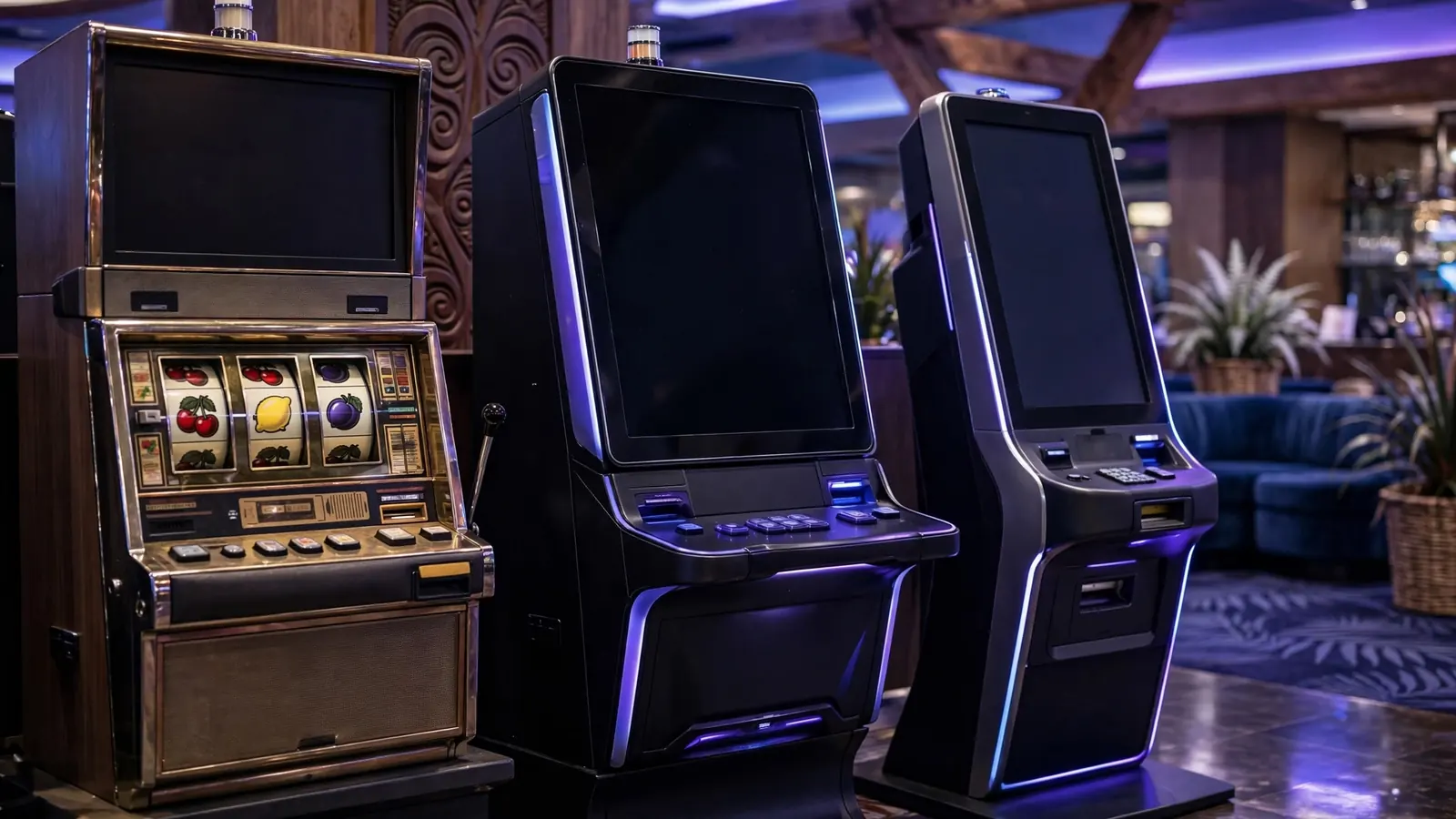
An electronic blackjack table game replaces the physical table interaction with an on-screen interface. You select a wager through the controls and see the game state on the display. In online RNG blackjack, software shuffles the cards, rather than a live dealer handling them. That format allows hands to move faster than live-dealer games. The quicker pace can make a session feel less interrupted, but it can also make it easier to place bets repeatedly without pausing to consider your spending.

Live-dealer blackjack sits between those experiences. A real dealer uses actual cards, while you follow the game through a stream and place your bets online. It resembles a casino table more closely than an RNG game, though the stream can introduce delays and some live tables may require higher bets. The wait for the video and the table’s pace can affect how quickly a hand progresses, so it is worth distinguishing this from an automated game when choosing a format.
Chips may be physical objects or digital markers on a screen. In either case, focus on the amount represented by your wager rather than how small or familiar the chip image looks. A digital interface can make betting feel abstract; a physical stack can make the amount easier to see, but neither changes the money at stake. Before playing for real money, decide on a budget you can afford to lose and stop when you reach it. Do not try to recover losses by increasing your bets.
If a game is offered with a promotion, read its fine print before you deposit or wager. Blackjack may contribute differently to wagering requirements, and maximum-bet rules can apply while meeting them. Check those conditions on trustworthy sites and casinos rather than assuming that a displayed offer applies to every game in the same way.
The useful distinction is the pace and method of play: physical chips and actual cards at a casino, software-shuffled cards in RNG games, or actual cards viewed through a live stream. Choose the format you can follow comfortably, and keep the betting decision separate from the appeal of the interface.
Uses physical chips and actual cards with a dealer, offering a social environment and visible action.
Features an on-screen interface and software-shuffled cards, allowing for a faster pace of play.
Combines a real dealer and physical cards with an online interface, though it may introduce stream delays.
When to Hit, Stand, Double Down or Split
Each decision changes how your hand can develop. You are playing against the dealer, trying to finish closer to 21 without going over. The right choice depends on the hand you hold and the options the table allows; no action guarantees a better result.
Hit or stand
When you hit, you ask for another card. That can move a low total closer to 21, but every added card changes the total and may take it past 21. Consider the value of your hand before asking for one: a total with room to grow presents a different risk from one already close to the goal.
Standing means keeping your current total and taking no more cards. You might stand when you judge that another card carries too much risk, or when you are content to let the dealer play against the hand you have. Standing does not improve your total; it simply stops your hand from changing. The dealer’s visible card and the table’s rules can also inform your decision, so a hit-or-stand choice should not be treated as a fixed answer for every hand.
A simple hit-or-stand table can be useful as a prompt, but it is not a universal instruction sheet. Its recommendations depend on the game’s rules and the hand information it uses. If those details do not match the table in front of you, applying the chart mechanically may lead you astray.
Double down
Doubling down is an option that changes both your stake and your hand’s development. You commit to a double down rather than continuing to take cards as you would after a hit; the exact conditions depend on the table rules. Before choosing it, make sure you understand what the game permits and are comfortable with the additional stake. Do not use it simply because a hand feels due to improve.
Split
If your first two cards have the same value, the table may allow you to split them into separate hands. You then play each hand in turn, which can create more ways for the cards to develop, but also means committing more money. Check the rules before splitting: eligibility and what happens next can vary by game.
These actions are choices, not a way to control the cards. Take a moment to identify your total, the available options and what each decision commits you to. If you are unsure about a rule, ask before acting rather than assuming that every table handles it the same way.
Choosing a Seat at the Blackjack Table
There is no seat at a blackjack table that makes a hand more likely to win. You are playing against the dealer, and the aim is still to finish closer to 21 without going over. A position may change how comfortable you feel or how easily you can follow the game, but it does not change the cards dealt to you.
If you are deciding where to sit, start with what you can see. Choose a place where the cards, dealer and table layout are clear from your position. If you have to lean around another player or strain to follow what is happening, a different open seat may be less distracting. Comfort matters over a session: you may prefer enough room for your chips and a clear view without feeling crowded.
Your position at the table affects your comfort and view, but it has no impact on the cards dealt or your likelihood of winning.
Think about how much interaction you want, too. A seat near other players may feel more social; a place with a little more space may suit you better if you prefer to focus quietly. Neither choice changes the game. You do not need to copy the person beside you or treat their decisions as guidance. Choose a position where you can make your own choices without feeling rushed by the group.
The best place to sit at blackjack is therefore a matter of personal fit, not a way to gain an edge. The first open seat is reasonable if the layout is easy to see and you feel at ease there. If you are unsure, take a moment to observe the table before joining, then sit only when you are comfortable with the setting. You can also wait for another seat rather than squeeze into a position that feels awkward.
Do not read meaning into a seat’s place around the table. Sitting first, last or between other players does not give you control over the dealer’s cards or another player’s outcome. Nor does a particular position make your choices safer. The table position is about your view and comfort; the game itself remains uncertain.
Once seated, keep your attention on your own hand and the dealer’s progress. If the view is blocked or the pace makes it difficult to follow, you can pause before continuing or move when an appropriate seat becomes available. A comfortable position can make the experience easier to manage, but it cannot promise a better result.
Reading a Blackjack Card Chart
A blackjack chart is a map from the hand you hold and the dealer’s visible card to an action allowed by the table. It helps you read those details consistently; it is not a promise that a particular decision will win. Before using one, check that it matches the game’s rules, since a chart prepared for different rules may point to different choices.
Start by identifying the kind of player hand shown. A hard hand has no ace counted as 11 without taking the total over 21. A soft hand includes an ace counted as 11, so its value can change if you take another card. A pair is shown separately because the chart may give a different option when the two cards have the same value.
Next, find the dealer’s visible card along the chart’s other axis. The cell where that column and your hand’s row meet gives the suggested action for that situation. Read the key carefully: abbreviations may stand for hit, stand, double down or split. Some charts also include surrender, but that choice is only available when the table rules allow it.
The card values help you place your hand in the right row. Number cards count at face value, face cards count as 10, and an ace may count as 1 or 11. For instance, when an ace can be treated either way without exceeding 21, the hand is soft; if it must count as 1 to keep the total within 21, it is hard.
Reading a Chart
Determine if your hand is hard (no ace counted as 11), soft (ace counted as 11), or a pair.
Locate the dealer’s visible upcard along the chart’s axis.
Find the intersection of your hand and the dealer’s card to see the suggested action (hit, stand, double, or split).
Do not treat every printed chart as interchangeable. Deck count, the dealer’s decision on soft 17, surrender availability and payout rules can differ between games, and those conditions may affect which chart applies. If the chart does not state its assumptions, compare it with the table’s posted rules before relying on it. Keep the chart as a way to organise a decision, not as a substitute for understanding the game you are playing.
A Blackjack Cheat Sheet for the Table
Keep this as a quick reminder of the card values and choices available to you. It is not a set of guaranteed plays: the rules of the particular game still matter, and your decision depends on your hand and the dealer’s upcard.
Card values
| Card | Value |
|---|---|
| Number card | Its face value |
| Jack, queen or king | 10 |
| Ace | 1 or 11 |
An ace can take whichever value helps the hand without pushing its total over 21. If counting it as 11 would take you over 21, it can count as 1 instead. This is why a hand containing an ace may have more than one useful total.
Actions at the table
- Hit: Take another card. Your total may improve, but it can also go over 21.
- Stand: Take no more cards and keep your current hand.
- Double down: Increase your wager and take a further card, subject to the table’s rules.
- Split: Separate a pair into two hands when the game allows it; the conditions for doing so can vary.
These are the main actions to remember, but not every table offers every option in the same circumstances. Check the rules before you rely on an action being available.
Before you act
Add your cards using the values above, remembering that the ace may count as either 1 or 11. Then consider which action fits your hand and the table’s rules. A quick reference can help you avoid mixing up card values or overlooking an available choice, but it cannot account for every rule variation or decide for you.
Use the sheet as a memory aid, not as a promise about the result of a hand. If the table’s instructions differ from this summary, follow the rules displayed for that game.
Check the Blackjack Table Limit and Rules Before You Sit
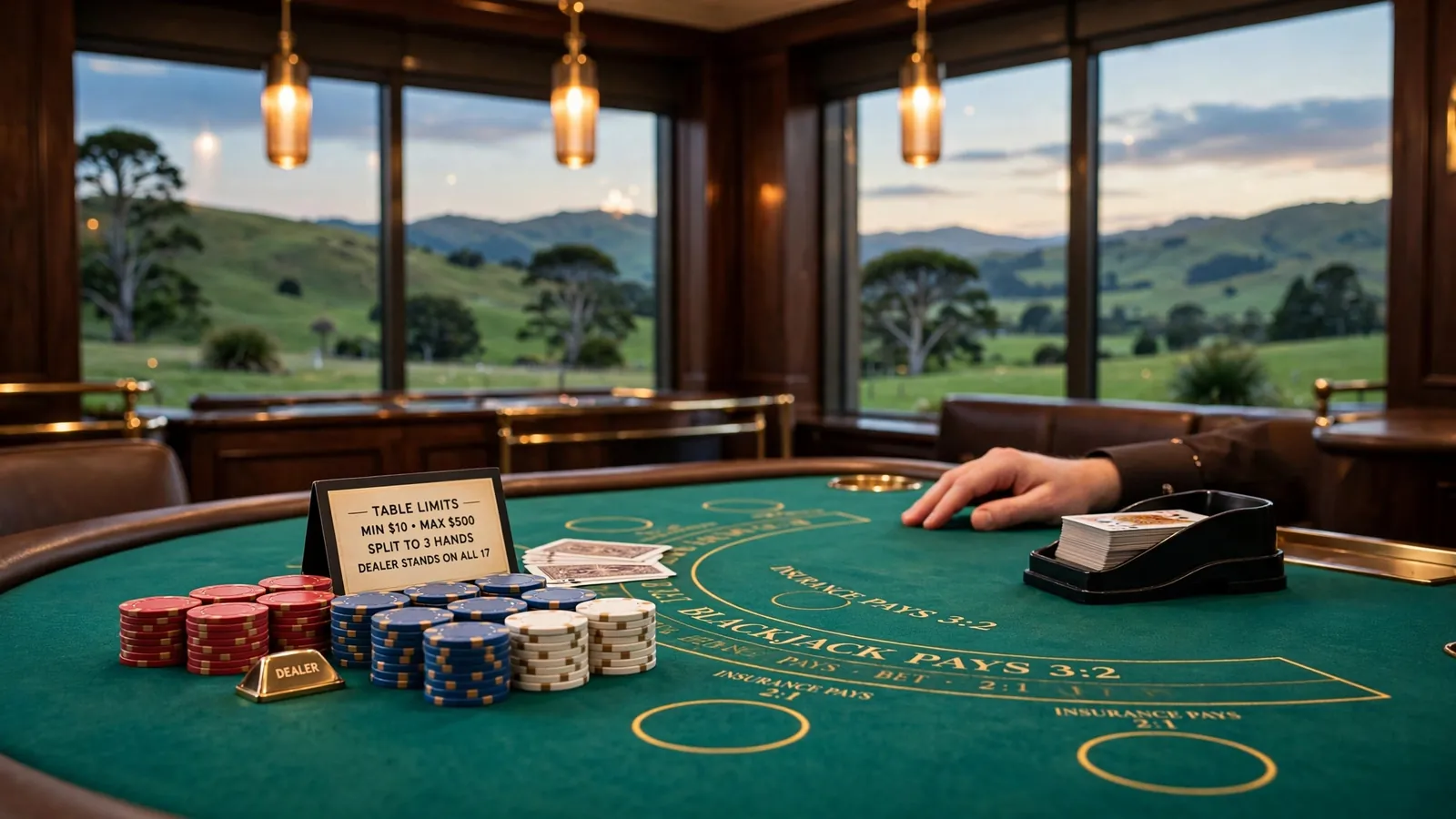
A posted limit tells you the stakes a table accepts, but it does not tell you whether its rules suit your expectations. Before taking a seat, read the table information as a whole: the limit, the number of decks, the dealer’s soft-17 rule and the payout terms all matter. Two tables with similar limits can still play differently.
Check whether the dealer takes another card on soft 17 or stands. Also look for whether surrender is offered and how many decks are used. These details can vary by game, so do not assume that a rule you saw at one table applies at another. If a sign or screen leaves something unclear, ask the dealer or staff before placing a bet.
Pay close attention to the natural-blackjack payout. A specialist blackjack review describes tables with a 3:2 payout and others with a 6:5 payout; treat those figures as reported examples, not a promise about any particular venue or current table. The payout should be stated in the game information. If you cannot confirm it, pause rather than relying on what you remember from another game.
Limits matter for a different reason: they help you see whether the table fits the amount you have decided you can spend. Set that budget before you sit, and do not raise it to recover losses. The minimum can affect whether you can join with your planned stake; the maximum can constrain how much you may wager on a hand. Neither tells you the likely outcome of play.
A quick check before sitting can be simple: confirm the accepted stakes, then read the rules and payout terms rather than judging the table by its limit alone. If you are comparing tables, make the comparison rule by rule. That gives you a clearer picture of what you are choosing without assuming that a higher or lower limit means better conditions.
Created by the ”Casino Payment Tips NZ” editorial team.