
Blackjack Sites in New Zealand: Rules and Tables
 Available in US
Licensing, table rules, game formats, payouts, and payment claims all affect how blackjack sites available in New Zealand compare.

Table of Contents
- How New Zealand’s Online Casino Licensing Framework Affects Blackjack Sites
- What to Check When Comparing Blackjack Websites
- What Changes When You Play Live-Dealer Blackjack
- How Online RNG Blackjack Works
- Blackjack Payouts and the Cost of a Real-Money Table
- Card Counting, Player Decisions, and Online Play
- Why Blackjack Rules Matter More Than a Site’s Label
- Check Payment Claims Before You Deposit
- Deck Count, Soft 17, and Other Table Rules
- Bitcoin Searches and the Limits of What You Can Verify
How New Zealand’s Online Casino Licensing Framework Affects Blackjack Sites
The rules governing blackjack websites available in New Zealand are changing. The Online Casino Gambling Act 2026 created the country’s first domestic licensing system for online casino gambling, but the full regime is not expected to be operational until 2027. That distinction matters: a website’s availability during the transition does not, by itself, mean it holds a New Zealand online casino licence.
The Act took effect on 1 May 2026 and set a transition period ending on 1 December 2026. Providers that were already offering online casino gambling to people in New Zealand before the start of that period may continue operating until its end, subject to the Act’s transitional provisions. Providers that have not applied for a licence must stop providing online casino gambling in New Zealand by 1 December. If an application is declined, the provider must cease those operations and leave the market.
Who oversees the framework?
The Department of Internal Affairs (DIA) is New Zealand’s primary gambling regulator and oversees regulation of the online casino licensing framework. Its role is broader than deciding individual licence applications: it is responsible for the regulatory framework within which online casino providers must operate.
Choosing a blackjack site in New Zealand means weighing the details available for each option. Use these short verdicts as a starting point for deciding what you want to check further.
Payout speed: 1-3 business days Wintino lists payout speed of 1–3 business days, giving you a stated timeframe to consider.
License: Curaçao Gaming Authority, licence no. OGL/2024/165/0185 BitStarz lists a Curaçao Gaming Authority licence, no. OGL/2024/165/0185.
License: Tobique Gaming Commission, licence no. 0000002 Ricky Casino lists a Tobique Gaming Commission licence, no. 0000002.
License: Tobique Gaming Commission, licence no. 0000064 Neospin lists a Tobique Gaming Commission licence, no. 0000064.
License: 07017519840 · Payout speed: 1-3 business days Zotabet lists identifier 07017519840 and a payout speed of 1–3 business days.
License: Malta Gaming Authority, licence no. MGA/B2C/394/2017 N1 Casino lists a Malta Gaming Authority licence, no. MGA/B2C/394/2017.
Payout speed: 1-3 business days Lamabet lists payout speed of 1–3 business days, a stated detail you can take into account.
License: Tobique Gaming Commission, licence no. 0000091 7Bit Casino lists a Tobique Gaming Commission licence, no. 0000091.
License: Malta Gaming Authority, licence no. MGA/B2C/370/2017 Play Grand lists a Malta Gaming Authority licence, no. MGA/B2C/370/2017.
The Gambling Commission has the distinct licensing function. It hears and determines casino licensing applications, issues online casino licences and approves changes to licence conditions. In practical terms, the DIA oversees the regulatory system, while the Commission makes decisions about applications and licence conditions. These are separate responsibilities, so a reference to one body should not be taken to mean it performs the other’s role.
This division also helps explain why licence status should be treated as a specific regulatory matter rather than inferred from a website’s appearance or its claims about being available to New Zealand players. The licensing regime is being brought in through a defined transition, and the relevant question is whether the provider’s position fits the rules applying at that time.
What the transition means for players
Before the 2026 Act, online casinos could not be based in New Zealand under the Gambling Act 2003. Gambling offered from offshore was not licensed or supervised by a New Zealand regulator, and customers who wagered with those websites had no domestic government recourse. The new law changes the framework, but it does not make the full licensing system immediately operational.
During the transition, a provider that was already serving New Zealand before 1 May 2026 may continue until 1 December 2026 under the transitional provisions. This temporary permission is not the same as holding a licence under the new regime. Providers must apply if they want to continue beyond the transition, and an application does not guarantee approval. A provider whose application is rejected must stop online casino operations in New Zealand and exit the market.

The legislation also restricts advertising to people in New Zealand during the transition period. This is one reason to be cautious about promotional claims: an advertisement or a prominent “New Zealand” label does not establish that a provider has been granted a local licence. Licensed operators may advertise under tight rules, but sponsorships are prohibited. The rules for the transition and those applying once licensing is fully operational should not be treated as interchangeable.
New Zealand prohibits domestic online casinos, and the Gambling Act 2003 does not permit them to be based in the country. The 2026 Act establishes a route for domestic licensing of online casino services; it does not mean that any website can simply claim local status. Unlicensed operation is expected to become an offence around mid-2027, and operators without a licence may face enforcement action and fines of up to NZ$5 million. Those consequences concern operators, not a player’s legal liability for using an offshore site.
Reading licence claims carefully
If a blackjack website describes itself as licensed, look for a clear statement about the licence and the regulator responsible for it. Under the new system, the Gambling Commission is the body that issues online casino licences and decides applications. A provider operating under transitional provisions should not be confused with one that has already received a licence. The timing and status of the provider matter.
Licensed operators must implement stricter age and identity verification systems. These checks are part of the regulatory requirements, not evidence by themselves that a particular provider has been licensed. A website may also describe its services in ways that sound official without clearly identifying its status under New Zealand’s system. Read the wording carefully and distinguish a claim about future eligibility or an application from an issued licence.
Legal Penalties
Unlicensed operation is expected to become an offence around mid-2027, with operators potentially facing enforcement action and fines of up to NZ$5 million.
For people considering blackjack sites in New Zealand in 2026, the central issue is the provider’s position within this changing framework. The DIA oversees the system; the Gambling Commission handles licensing decisions and changes to licence conditions. Transitional permission is time-limited, and the full licensed regime is still to come. Those points provide a more reliable basis for understanding a site’s regulatory status than a broad claim that it is available to New Zealand players.
What to Check When Comparing Blackjack Websites
Blackjack is a contest against the dealer: your aim is to finish closer to 21 than the dealer without going over. That objective gives you a practical way to compare the games presented on different websites. Rather than relying on a broad “best” label, look for a clear explanation of what counts as a winning hand and how the result is decided.
Start with the basic comparison. Your hand is not judged in isolation; its result depends on the dealer’s hand. A total close to 21 can still lose if the dealer finishes closer, while exceeding 21 defeats the aim regardless of what the dealer holds. If a game description does not make that relationship easy to understand, take time to find the rules before playing. A name or short promotional description is not a substitute for knowing how a hand is settled.

It also helps to separate the game’s objective from the way a website describes its selection. A page may use broad claims about having a strong blackjack offering, but those words do not tell you whether the actual game rules are clearly available. Look for the explanation attached to the specific table or game you are considering, and check that it describes how your result is compared with the dealer’s. This keeps your decision tied to the game itself, not to a general claim about the site.
A simple comparison checklist
When you review a blackjack game, consider:
- Is the aim of getting closer to 21 than the dealer stated plainly?
- Is it clear that going over 21 means you have missed that aim?
- Can you find the game’s rules before starting a hand?
- Does the information relate to the particular game, rather than only to the website as a whole?
- Do the instructions leave you confident about how your hand and the dealer’s hand are compared?
These checks do not rank websites or promise a particular outcome. They help you identify whether the basic contest is explained well enough for you to make an informed choice. If the wording is unclear, pause rather than assuming that another game with a similar name works in exactly the same way.
The score you hope to reach is only part of the decision. The dealer is your opponent, and the goal is relative: you need to finish closer to 21 than the dealer without exceeding it. That means a description focused only on reaching a high total can leave out an important part of the game. Read for the comparison, not just for a phrase that mentions 21.
Be wary of treating convenience or a polished page as evidence that you understand the game. A website can present blackjack attractively while leaving the important explanation elsewhere. Before you begin, make sure you have located the rules for the game you intend to play and can follow how the player’s result relates to the dealer’s. If you cannot tell from the available explanation, choosing another clearly described game is a sensible option.
Blackjack Comparison
- Is the aim of getting closer to 21 than the dealer stated plainly?
- Is it clear that going over 21 means you have missed that aim?
- Can you find the game’s rules before starting a hand?
- Does the information relate to the particular game rather than only the website?
- Do the instructions clearly explain how your hand and the dealer’s hand are compared?
A careful comparison is more useful than searching for a single site-wide answer. The question is not simply which website calls itself the best, but whether the particular blackjack game gives you enough information to understand its central objective. Keep that standard in mind as you compare options, and do not let confident labels replace a clear account of how a hand is judged.
What Changes When You Play Live-Dealer Blackjack
Live-dealer blackjack puts actual cards and a human dealer at the centre of the game. You watch the table through a video stream and make your decisions while the dealer handles the cards. That can feel closer to sitting at a casino table than playing against a digital display, but the experience still depends on an internet connection and a remote feed.
The difference is most noticeable in the pace. A live game follows the dealer’s actions and the stream, rather than moving instantly from one hand to the next. If the video is delayed, the action can feel less immediate. A pause may come from the stream rather than from anything happening at the table, so avoid making a rushed decision just to keep up. If the feed becomes difficult to follow, stepping away is safer than continuing while unsure what has happened.
The physical table can also shape how you experience each hand. You see cards being dealt, rather than relying on an entirely computer-generated presentation. For some players, that visible process makes the game feel more familiar. It does not, by itself, tell you whether a particular table is suitable or whether its terms are favourable. The label “live dealer” describes how the game is presented; it is not a substitute for checking the actual table information.

A live table may also require higher bets than you are comfortable with. Check the minimum stake before joining, and decide in advance what you can afford to lose. If the available table is outside that budget, do not raise your limit to take part. Set a spending boundary before play and do not chase losses by depositing more after a difficult session. Live presentation can make the game feel involving, but it does not change the importance of keeping control over your spending.
When comparing live-dealer options, focus on practical fit rather than claims that a site is the “best.” Consider whether the stream is clear enough for you to follow, whether its pace suits you, and whether the table’s stated minimum works with your budget. A smooth-looking feed cannot guarantee that it will remain uninterrupted, and a prominent listing is not proof that the game’s conditions suit you. Read the table information and the operator’s terms before wagering real money.
Be especially careful if a promotion is part of the decision. Check the fine print and bonus conditions on trustworthy sites and casinos before playing with real money. Blackjack may contribute differently to wagering requirements, and maximum-bet rules can apply while wagering. Do not assume that a live table counts in the same way as another game; confirm the conditions that apply before accepting an offer.
- Check the minimum stake before joining a live table
- Set a spending boundary before you begin play
- Confirm bonus conditions and wagering requirements
- Raise your budget to fit a specific table’s minimum
- Chase losses by depositing more after a difficult session
- Assume live tables contribute to wagering like other games
A useful test is whether you can comfortably follow the stream and play within your planned budget without feeling pressured by the pace or the table minimum. If not, you can leave the table. Live-dealer blackjack offers the feel of cards being dealt at a casino table, but the video connection and stake requirements are part of the experience too.
How Online RNG Blackjack Works
RNG stands for random number generator. In online RNG blackjack, software handles the shuffle rather than a dealer physically mixing cards. The game presents the result on screen, and play can move faster than at a live-dealer table because it does not depend on a streamed physical game.
That difference describes the format, not the quality of a website. A page calling itself an online blackjack destination does not, by that label alone, tell you how its game works. Look for a clear indication that the table uses RNG software, and keep that separate from claims about bonuses, payment options or overall value. Those are different matters and need their own checks.
The software-based shuffle also means you do not watch a dealer handle a physical deck. Instead, the game displays cards as the software produces them. That can make the pace feel more direct: there is no visible dealing sequence to wait through, and decisions can follow one another more quickly. Faster play is not automatically a better fit. If you prefer more time between hands, a brisker format may make it easier to lose track of how long you have been playing.
The same pace can affect how you manage your attention. Decide in advance how much time and money you are prepared to spend, then take a break if the game begins to feel rushed. Avoid chasing losses by continuing simply because the next hand arrives quickly. A short pause can help you make a deliberate choice rather than letting the game’s rhythm make it for you.

RNG tells you how the game handles shuffling; it does not explain every feature of a table. The rules shown for a particular game still matter, and the label does not establish what payout terms apply. Read the game information before playing rather than assuming that all software-based tables operate identically. A format description is a starting point, not a substitute for the details attached to the table.
The distinction matters when you see promotional language alongside a blackjack game. A bonus does not change the fact that the cards are generated through software, and the presence of a bonus does not tell you whether blackjack contributes to wagering requirements in the same way as other games. Check the fine print and bonus conditions before using an offer. Pay attention to any maximum-bet rules that apply while wagering requirements are active, as well as how blackjack is treated under those terms.
Likewise, RNG is not a statement about which currencies or deposit methods a website accepts. It describes the game’s software-based shuffle, not the site’s payment arrangements. Keep these questions separate so that one familiar label does not stand in for information you still need to verify.
The practical difference is straightforward: software shuffles allow faster play than live-dealer games, while the cards are presented without a physical dealer handling them in front of you. Whether that pace suits you depends on how you prefer to play and how well you can keep to your own limits. The format alone does not make a game safer, more generous or more suitable for your circumstances.
RNG stands for random number generator; in online blackjack, this software handles the shuffle rather than a physical dealer mixing cards.
Blackjack Payouts and the Cost of a Real-Money Table
A natural blackjack can carry a different payout from an ordinary winning hand, so the table’s rules affect what you receive when your first two cards make blackjack. A specialist review describes the familiar comparison: some tables pay 3:2 on a natural, while others pay 6:5. Treat those as rules to verify at the table you intend to play, rather than assuming every blackjack game uses the same rate.
The difference is in the return for the same qualifying hand and stake. At 3:2, the winnings are one and a half times the stake; at 6:5, they are one and a fifth. The lower rate therefore gives you less for a natural blackjack. It does not change the cards you are dealt, but it changes the value of that result. Across repeated play, a less favourable payout can make a real-money table more costly.
Before you place a wager, open the game’s rules or paytable and find the natural-blackjack payout. Make sure the rate applies to the game you have actually selected, not just to a general description of blackjack elsewhere on the website. If the rules are unclear, do not assume the more favourable rate. A table’s name or a site’s broad claim about its blackjack offering is not a substitute for checking the specific payout.

This detail matters when comparing places to play for real money. A polished interface or a wide game selection cannot compensate for a payout you would not knowingly accept. Compare the rules shown for the individual tables, and avoid choosing on presentation alone. You are not looking for a label that sounds favourable; you need to know what a natural blackjack pays before you commit money.
Also read the conditions attached to any bonus before using it. Blackjack may contribute differently from other games towards wagering requirements, and maximum bet rules may apply while those requirements are active. Those terms can affect how you use a balance, so check them alongside the table payout rather than assuming that a bonus removes the cost of a less favourable rule. Fine print matters most when it changes what you can wager or how play counts.
A sensible limit can keep the decision manageable: set a budget before you start and do not increase it to chase losses. A higher payout does not guarantee a winning session, and a lower one should not be treated as something you can recover by continuing to play. The useful comparison is concrete: identify the natural-blackjack rate, read the relevant conditions, and decide whether the table’s terms fit your budget before wagering.
Card Counting, Player Decisions, and Online Play
Card counting can mean keeping a mental estimate of which cards have already appeared and how that might affect the cards left to be dealt. In New Zealand, using mental calculation to count cards is not illegal. That legal point is separate from whether the method can help in a particular online game, and it should not be read as a promise of an advantage.
Attention: While mental card counting is not illegal in New Zealand, software shuffles in RNG games change the basis for tracking cards, meaning counting may not produce a reliable edge.
At the table, your decisions remain the practical focus. You can hit to take another card, stand to keep your hand as it is, double down, or split a pair when the game allows it. Each choice changes how the hand proceeds; none guarantees a favourable result. A count, even if you can maintain one, does not replace decisions about the hand in front of you.
The format matters when considering whether counting has any useful role. Online RNG blackjack uses software shuffles and moves at a faster pace than live-dealer play. A software shuffle changes the basis for tracking cards from hand to hand, so the fact that mental counting is lawful does not show that it will produce a reliable edge in an RNG game. Do not confuse the ability to count with evidence that a particular online table can be beaten this way. Nor should a faster sequence of hands be mistaken for a better opportunity: it can simply mean decisions and results arrive more quickly.
If you are comparing places to play blackjack online, do not treat claims about card counting as proof that a site or game is suitable for it. Look at the actual game conditions and decide whether you understand the choices available before wagering. A site’s label or promotional language cannot establish that counting will work. Avoid systems described as guaranteed ways to win; no betting pattern can remove the uncertainty of the game.
For real-money play, set a budget you can afford to lose and do not chase losses by increasing your stakes. If you use a bonus, read its fine print before accepting it. Blackjack may count differently toward wagering requirements than other games, and maximum bet rules can apply while you are wagering. Those conditions can affect what you may do with bonus funds, regardless of how carefully you make decisions at the table. Insurance is another decision that deserves restraint; most players should avoid using it as a bet.

Keep the distinction clear: mental card counting is not illegal in New Zealand, but that alone says nothing about its effectiveness online. Make decisions from the rules and hand you are actually playing, not from a claim that counting guarantees a result.
Why Blackjack Rules Matter More Than a Site’s Label
A website’s description may call a game “classic” or present it as a strong choice for blackjack, but the label does not tell you how the table works. Different blackjack variants use different rules, and those differences can change both the decisions available to you and the house edge. A favourable-sounding description is no substitute for the rules attached to the specific game.
That matters when you compare places to play. A site may offer several versions, so a general claim about its blackjack selection cannot tell you whether a particular table suits your preferences. Read the game’s information before you begin, and compare the rules of the tables themselves rather than assuming that games with similar names are equivalent.
The house edge is one reason to take that step. It describes the casino’s mathematical advantage under a set of game conditions; it is not a prediction of what will happen in an individual session. Since variants can change the conditions that shape strategy and the house edge, a claim about one version should not be treated as a claim about every blackjack game on a website. Nor does a lower stated edge mean that you are certain to win.
Game Rules
- Variant rules can change available decisions and the house edge
- Strategy guides must match the specific version of the game being played
- Bonus wagering requirements and maximum bets can vary by game
- Budgets should be set in advance to avoid chasing losses
Your decisions matter too. A variant’s rules can affect which choices are available and how you should approach a hand. If you rely on a strategy guide, check that it applies to the version in front of you. Advice written for a different set of rules may not fit, even when the game carries a familiar blackjack label.
Promotional language can make comparisons harder by focusing attention on the site rather than the table. Instead, look for the rules displayed for the particular game and make sure you understand them before wagering. If the information is unclear, do not assume the terms are the same as those of another version. You can choose a different table or pause rather than make a decision based on a broad claim.
The same care applies if a bonus is involved. Check the fine print, including wagering requirements and any maximum bet rules that apply while wagering. Blackjack may contribute differently to wagering requirements than other games, so do not assume that playing it will satisfy those conditions in the way you expect.
Set a budget before you start and do not chase losses. Avoid using insurance as a bet if you are among most players; it is not a dependable way to improve your result. A careful comparison cannot remove the uncertainty of gambling, but it can help you understand what you are choosing instead of relying on a site’s label.
Check Payment Claims Before You Deposit
A site may be described as a place to play blackjack and accept PayPal, but that wording is not enough to establish that you can use PayPal there. Treat payment claims as something to verify directly before you create an account or deposit. Do not assume that a payment logo, a page title or a comparison table reflects the options currently available to you.

If you are considering a site because it appears among the best or top choices, separate the payment claim from the recommendation. A ranking does not confirm that a particular method is available, and a list of leading blackjack sites is not a substitute for checking the operator’s own terms. Look for clear information about deposits and withdrawals, then compare it with what the site shows in its payment area. If the details conflict or are unclear, pause rather than depositing to find out.
Before using PayPal, check whether the operator explicitly names it as an accepted method and whether the stated conditions apply to your account and location. Read the conditions for both deposits and withdrawals; a method being mentioned for one does not, by itself, establish that it can be used for the other. Check any stated restrictions or charges, and make sure you understand what happens if a transaction is delayed or declined. Do not rely on a claim copied across several review pages if the operator’s own information says something different.
The same care applies to bonuses. Read the full terms before accepting an offer, including wagering requirements, the contribution assigned to blackjack and any maximum bet rules during wagering. These conditions can affect whether a bonus suits the way you intend to play. If you cannot find or understand the relevant terms, declining the offer is a more cautious choice than assuming it is straightforward.
PayPal Verification Steps
You should verify that the operator explicitly names PayPal as an accepted method and check whether it is available for both deposits and withdrawals. Additionally, review any stated restrictions or charges associated with the method before depositing.
A payment option is only one part of deciding whether to play. Set a budget you can afford to lose before depositing, and do not add funds to chase losses or recover a declined transaction. Keep the decision separate from pressure created by a promotion or a ranking. For a real-money table, check the site’s current payment information and the game terms before committing funds; if either remains uncertain, wait until you can verify it.
Deck Count, Soft 17, and Other Table Rules
A blackjack table’s label does not tell you every rule that shapes a hand. A specialist review notes that deck count, the dealer’s decision on soft 17, surrender options and blackjack payouts can differ from one game to another. Treat those details as features of the individual table, not as rules that apply across every blackjack game.
Deck count is one point to check when comparing tables, including if you are looking for single-deck blackjack. The number of decks alone does not establish whether a table suits you: the other rules matter too. Look for the game’s information panel or rules before you begin, and confirm that it describes the table you have actually selected.
Soft 17 is a hand containing an ace counted as 11 without the total going over 21. Check whether the dealer must take another card on that hand or must stand. That instruction affects how the round proceeds, so it is worth understanding before you make a decision at the table.
Check the available player actions as well. Depending on the rules, you may be able to hit, stand, double down, split or surrender. These options are not necessarily available in every situation, and the table’s rules determine when they can be used. If surrender is offered, read how the game describes its terms rather than assuming the option works the same way everywhere.
Payout wording deserves equal attention. A table may state its blackjack payout alongside its other rules; do not assume the terms match those of another game. If you cannot find a clear explanation, choosing another table is more sensible than relying on a broad claim about a site.
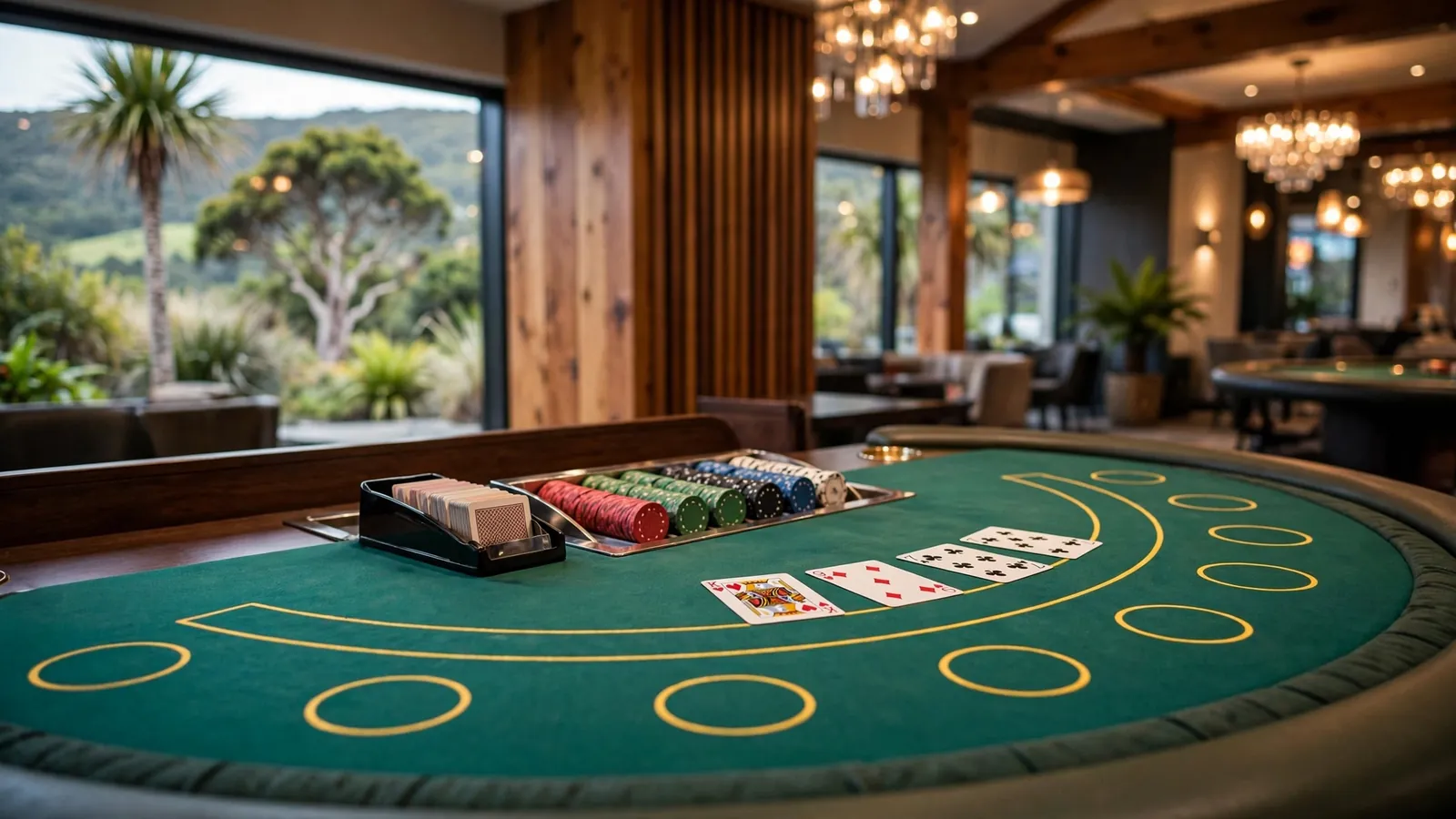
Before playing for real money, read the full table rules and any relevant bonus conditions. Set a budget you can afford to lose, and do not chase losses by changing it. The point of checking is not to find a label that promises an advantage; it is to know the conditions of the game before you decide whether to play.
Bitcoin Searches and the Limits of What You Can Verify
A blackjack site that advertises Bitcoin deposits may sound straightforward, but the payment claim is only one part of what you need to assess. Check the site’s own terms for how deposits and withdrawals are handled, whether the same method is available for both, and whether any conditions apply. Do not assume that a Bitcoin logo or a page describing cryptocurrency tells you what will happen to your funds.
Treat claims about the “best” online blackjack sites with similar care. A polished comparison or prominent payment badge does not establish that a site is suitable for you, or that its payment details are current. Look for clear terms and confirm the information directly with the operator before depositing. Avoid relying on claims that cannot be checked.

The game format is separate from its payment method. Online RNG blackjack uses software shuffles and generally moves faster than live-dealer play, but that says nothing about whether Bitcoin is accepted or how a transaction is processed. Keep those questions distinct when reviewing a site.
New Zealand’s licensing position also matters. The Online Casino Gambling Act 2026 created the country’s first domestic licensing framework, with a transition for eligible services already operating before the Act took effect on 1 May 2026. During that transition, do not treat a payment option or an offshore site’s marketing as proof of domestic approval. Check what the provider says about its status and the terms that apply to New Zealand customers.
Before putting money at risk, set a budget you can afford to lose and do not chase losses. If a deposit or withdrawal condition is unclear, pause rather than relying on an assumption. Bitcoin can change how a transaction is made; it does not remove the need to understand the operator’s terms.
Is card counting illegal?
No. Counting cards using mental calculation is not illegal under New Zealand law.
Does blackjack always pay 3:2?
No. A natural blackjack often pays 3:2, but some tables pay 6:5.
Can a player complain to DIA about an offshore site?
No. Players wagering with offshore websites had no domestic government recourse under the previous framework.
Prepared by the Casino Payment Tips NZ editorial staff.